
Early Childhood Educators: Putting Our Whole Heart Into It
October 20, 2025
Early Childhood Educators: Putting Our Whole Heart Into It

This is a Humans of St. Louis + WEPOWER collab to amplify the stories of educators and families who are part of the childcare community. Childcare providers and workers are on the frontlines no matter what — during COVID, during the tornado, and catastrophe after catastrophe — so parents can go to work, provide for their families, and keep our economy running. We hope you get an opportunity to learn more about what it’s like to be a parent of a child who is five years old or younger, and what it’s like to care for those children at early childhood centers throughout St. Louis.
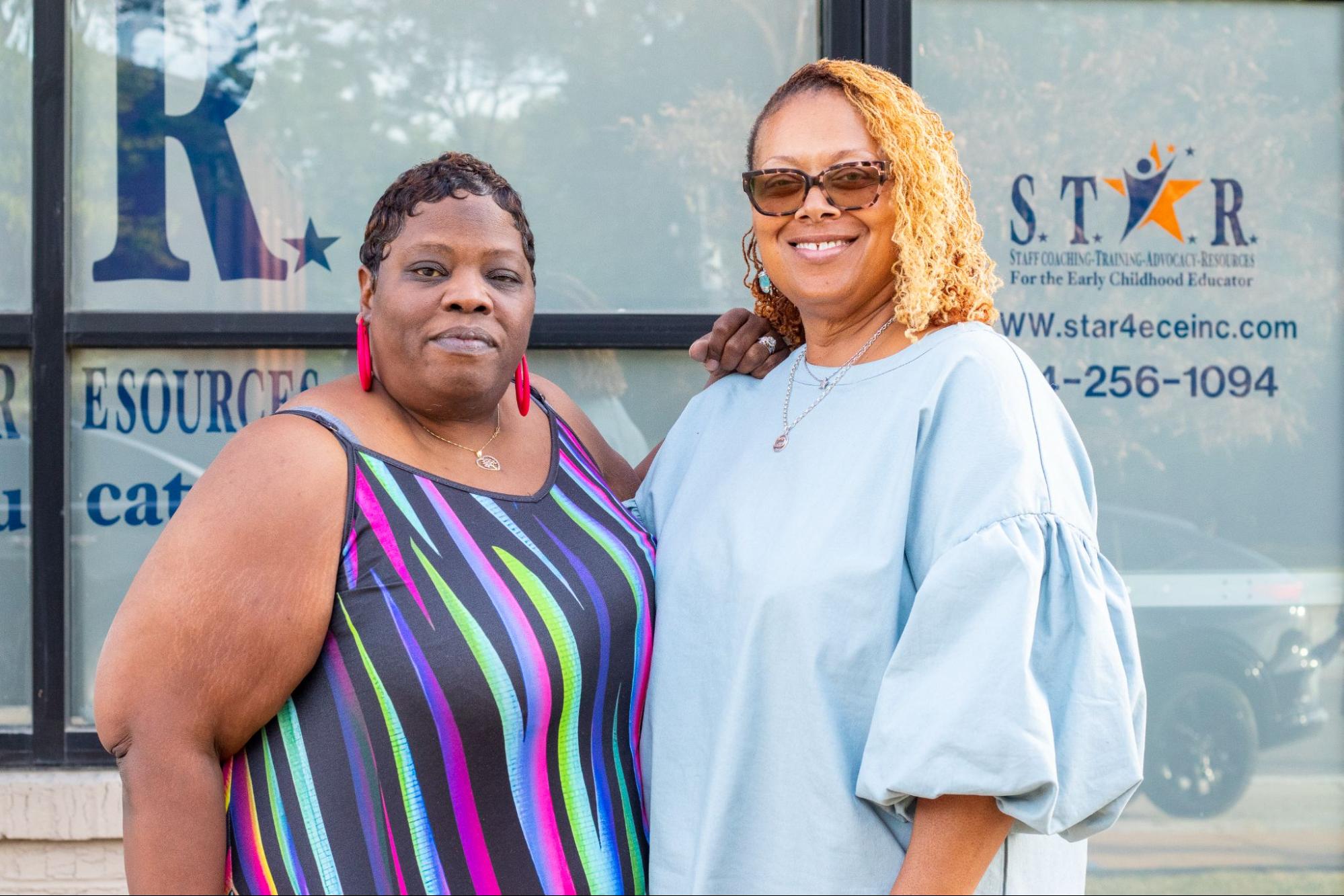
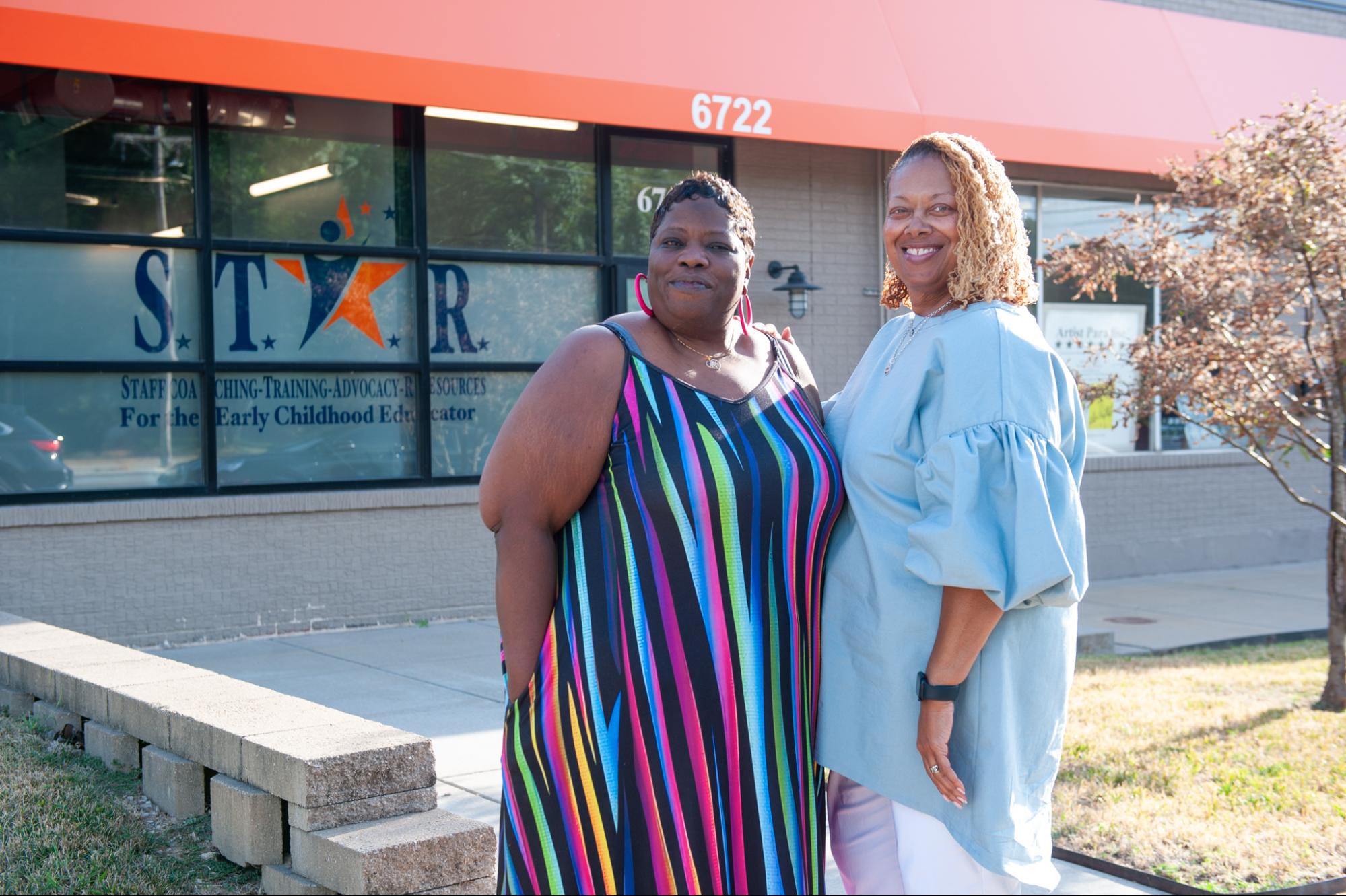
This story highlights the work of Tina Mosley and Adrienne Pennington from STAR Coaching.
Interview by Kiara Fite. Photostory by Kiara Fite and Lindy Drew.
TINA: “When people ask, ‘Are those all your children?’ I say, ‘Yes, they are.’”
ADRIENNE: “I met this young lady on a field trip. We ended up going to the same places and bumping into each other. I knew the type of person she was because of how she treated her children. So one day, I asked, ‘Will you watch my children for a sec?’ Then she asked, ‘Will you watch mine?’ I wouldn’t dare ask just anyone to watch my children. I’ve seen providers sitting on their phones with their kids. Please, sit down with your children. In our community, people don’t see me, and they don’t see her. We’re both Black women with Black children. It matters to us if a provider is sitting on her phone while her children are doing something else. It matters to us that they’re not paying attention when they’re supposed to be watching their children. We’ve seen someone drive a childcare van on their phone while kids were in the back.”
TINA: “If that driver is on their phone with their AirPods in, bopping to the music, I’m writing the number down on that van.”
ADRIENNE: “Yeah, it doesn’t make a difference who is in the driver’s seat. We have to be accountable for each other. But because we’re Black, we get more stereotyped. So, it does matter.”

ADRIENNE: “We’re down the street from each other in North County off of I-70. That’s how we share staff members. During COVID, childcare centers had to close, but we stayed open and nobody got sick. We couldn’t give teachers a full eight hours. So, we’d give them four hours each. We Ubered them back and forth at no cost to them. They didn’t lose any money, and we didn’t lose a teacher.”
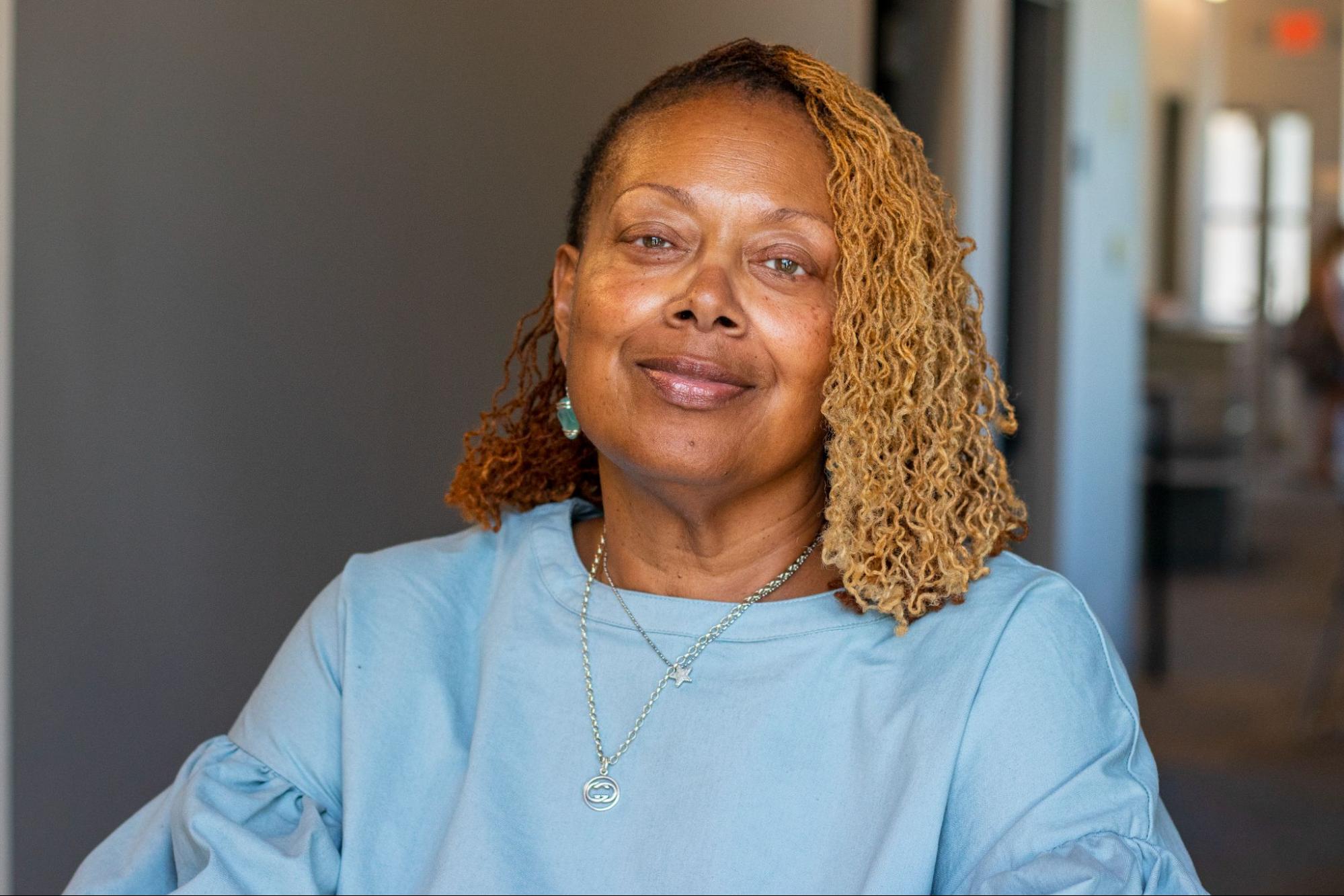
“I didn’t know anything about quality childcare when my own children were almost one and three, but I was also curious enough to get familiar with other family childcare programs. I felt a tug on my heart and pulled my kids out. Then, I took them somewhere else I didn’t end up liking, pulled them out, and moved them again. In the end, I took them back to where they started because I couldn’t afford what I really wanted. My husband and I worked at what we thought were decent jobs. But our children’s tuition was more than our mortgage. At work, I’d call the kids’ childcare to check on them. I had conversations with God and my husband, like, ‘I can’t keep them there. What are we going to do?’ We had to work. Then God spoke to me and said, ‘Start your own.’ ‘What? I don’t do kids like that. Never in a million years.’ On Presidents’ Day, we dropped our kids off at daycare so we could see a movie, have lunch, and stay home. I told God, ‘Let’s make a deal. Make this business happen fast.’ Shortly after, I got rear-ended by a drunk driver and was out on sick leave for six weeks. During that time, someone showed me how to apply for my license to operate. I got it in six weeks, and it usually takes six months to a year.
Everybody had children my age, so I called my friends and family to say, ‘I’m opening a daycare. If you have toys, cots, whatever, bring them over here.’ All of a sudden, I looked out on my porch, and people dropped off stuff. We put both our boys in the same room and took all of our furniture to the basement. Our living room and dining room got pushed together. Licensing came out and approved everything. Suddenly, I looked up and had a daycare. Watch what you say to God.
Family childcare can include up to 10 children. I had my two sons. My husband’s secretary gave me her grandchild. My sister gave me her four children. And a lady whom I didn’t know gave me her three children. I remember being with my three-year-old, driving down the street, asking him what we should name our daycare. He said, ‘It’s going to be for everybody. So it’s going to be Our Daycare.’ There it was, open and full in September 1997.”
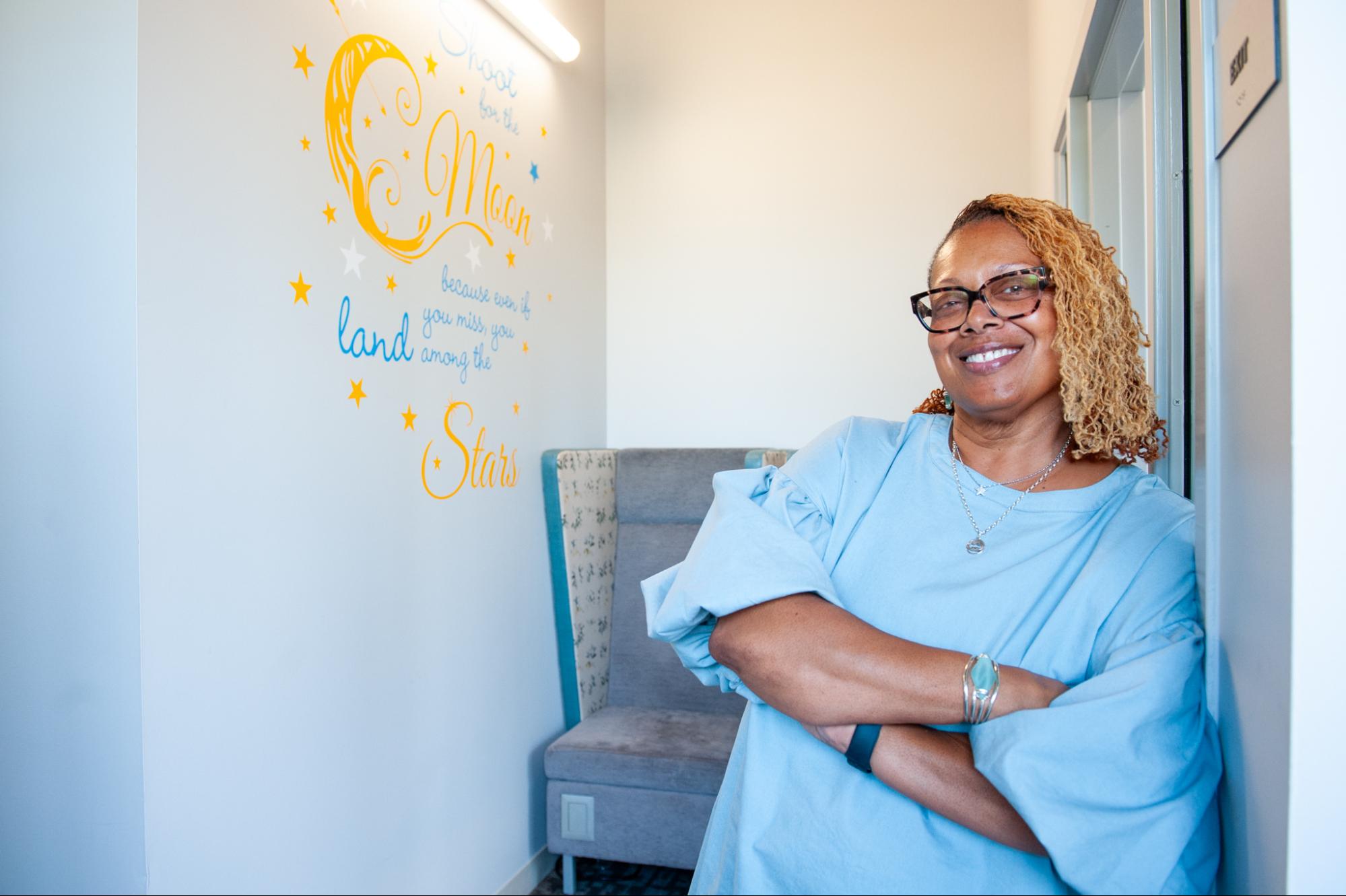
“The following January, I enrolled in St. Louis Community College and took an art and music class to figure out things to do with the children. I hadn’t even considered brain development. Shortly after, I met an instructor who told me to take an introduction to early childcare development. I took three classes, fell in love with childcare and child development, and have been in love with it ever since. I told God I’d give every child who walked through my door the same things I wanted for my children. Even when I didn’t want to do it anymore, He tugged my heart and said, ‘Remember what you promised.’ And this promise has been kept for 30 years. I don’t count the children I’ve cared for. I count the generations. We care for a child from birth to five, and then they go to kindergarten. Every five years, we have a new generation. So, I’ve cared for many, many, many generations.”

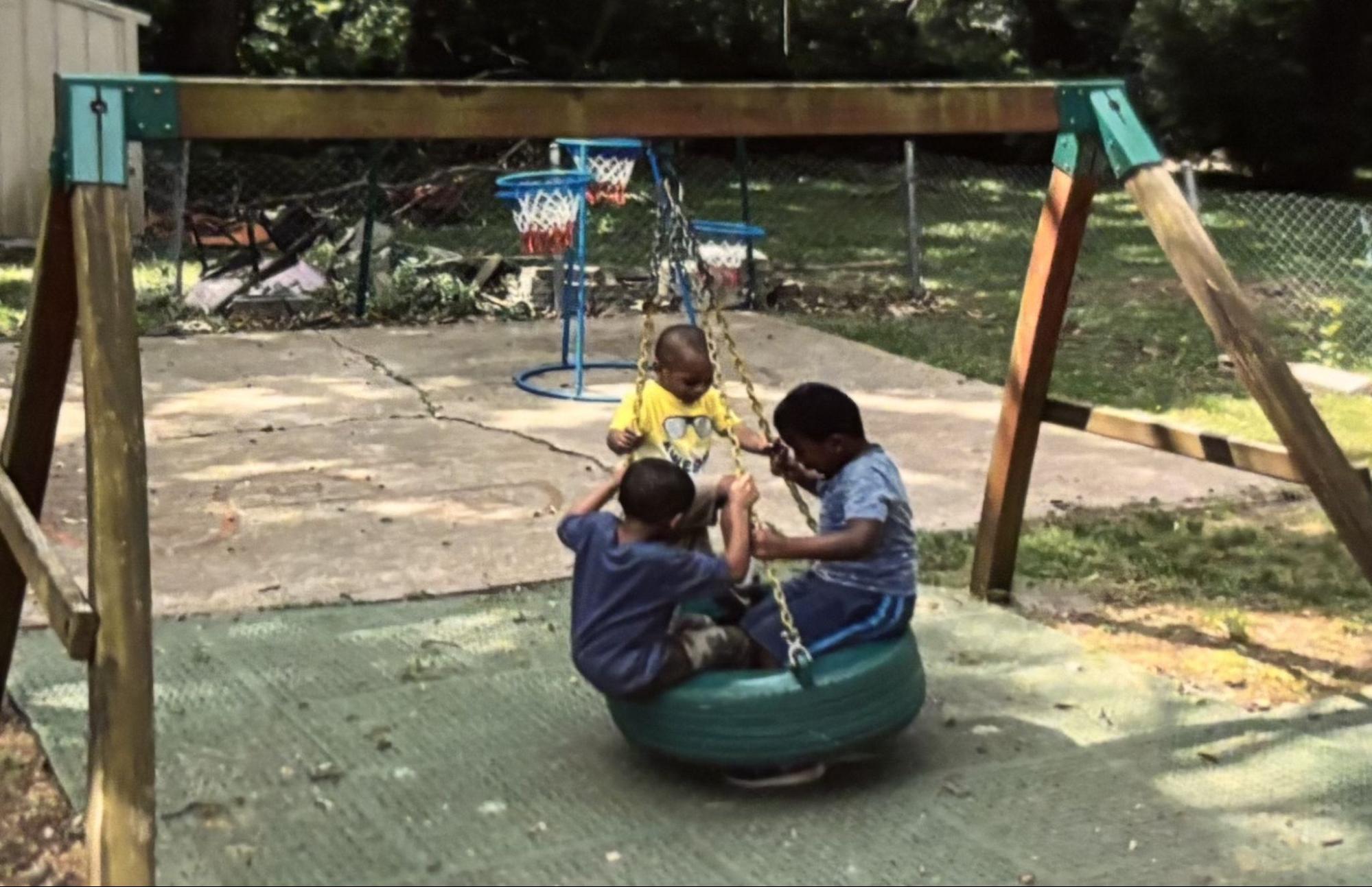


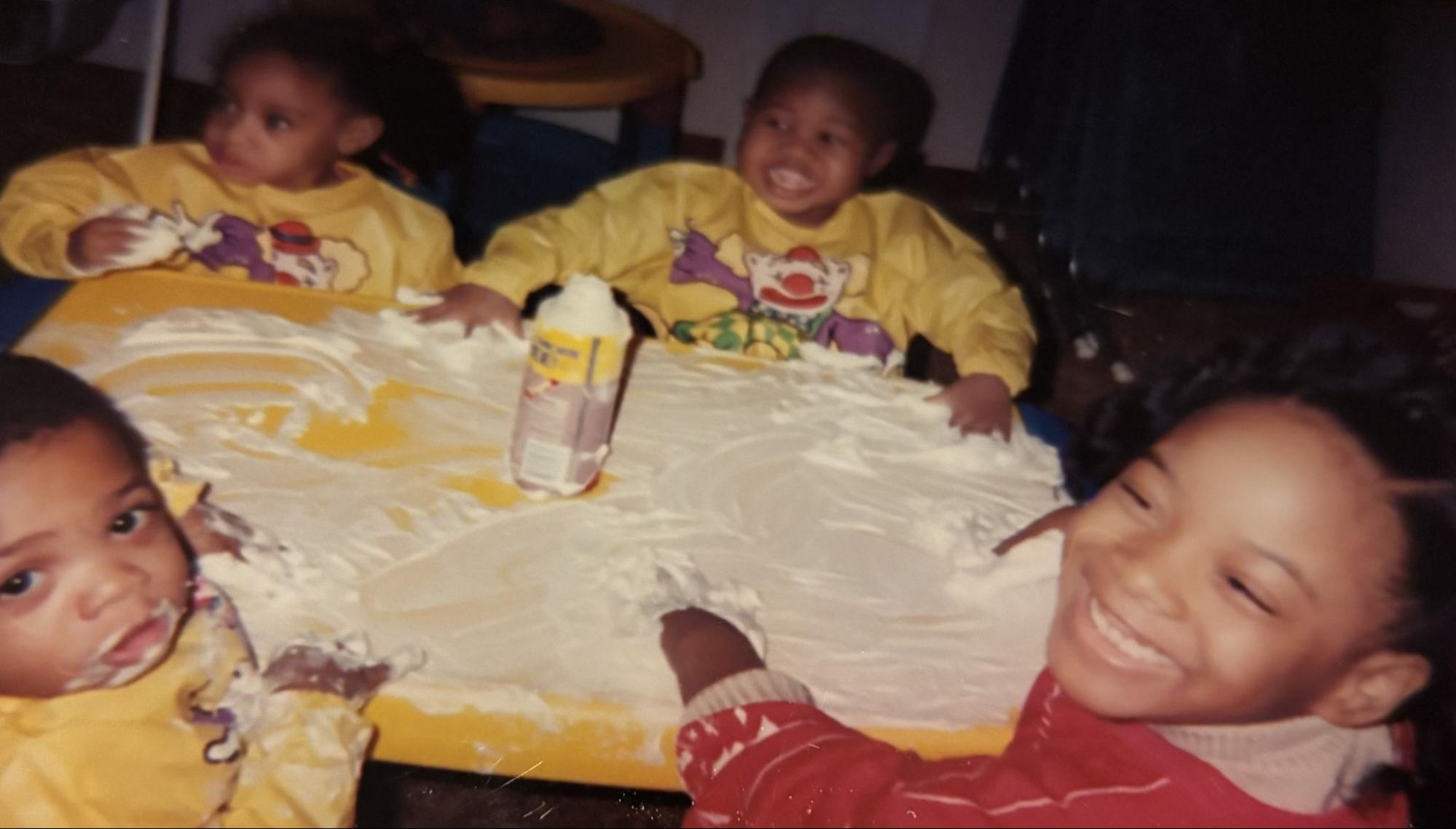
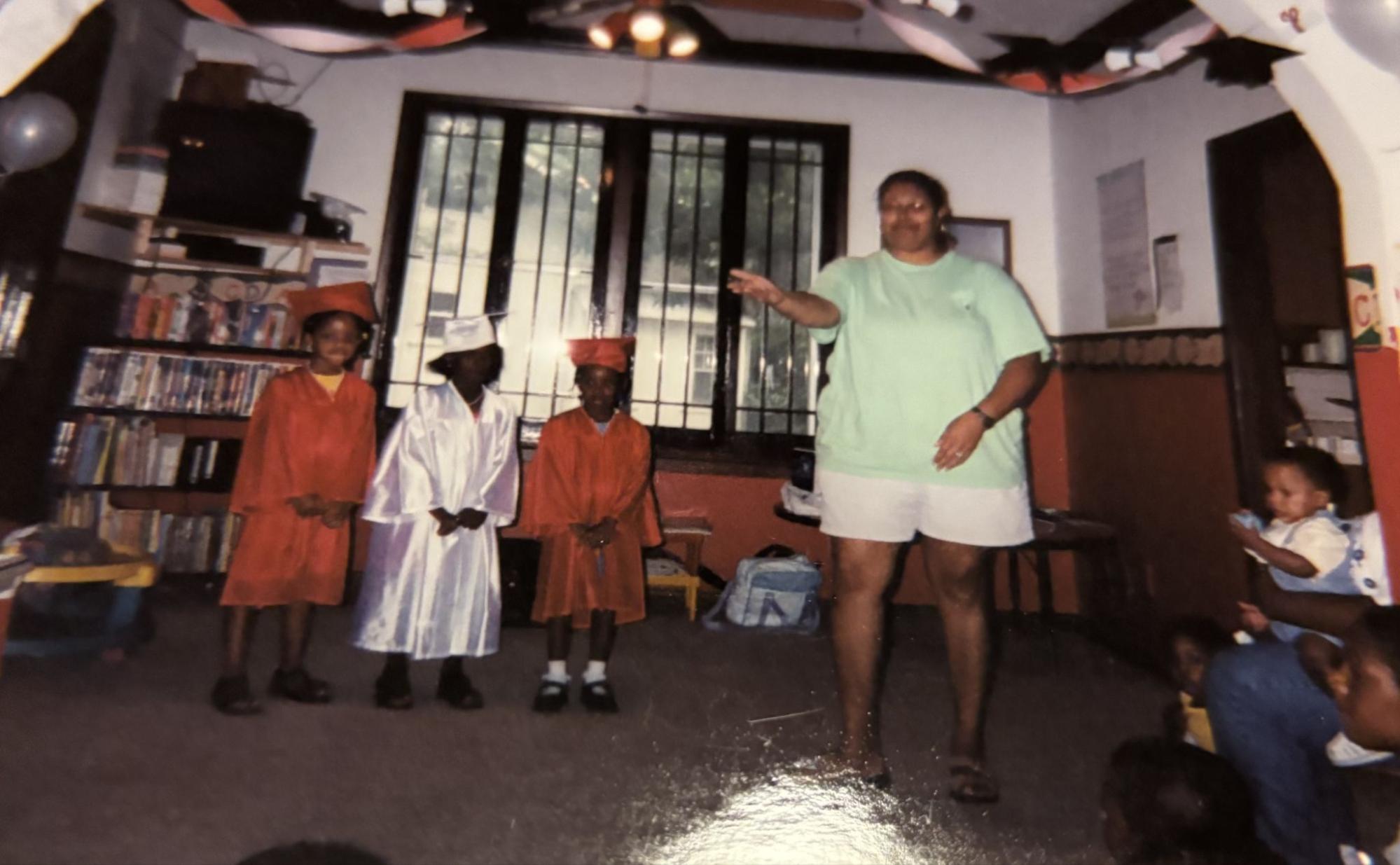

“I’ve always wanted to be a teacher. My mom said that at seven years old, I made sure everybody on the block sat on our steps, where I taught them their ABCs and 123s. We lived in University City, and I didn’t get a chance to go to an early childhood center. Instead, teachers came to our home and taught us. The lady made sure that I knew things like ‘A-Tisket, A-Tasket,’ and it stuck with me all my life.
I was sent out for school with the desegregation program. Eventually, I went to North Technical High School, studied early childhood education, graduated second in my class, and went straight to Wellston School District as a kindergarten teacher. After that, I lost my job and worked in many childcare centers.
Then one time, my daughter got hurt at her childcare center, nobody could tell me what really happened, and I never wanted her to be in another childcare center again. She had to have stitches, surgeries — all kinds of things — and her teeth were pulled out. She even got lead poisoning in her mouth from the impact of the floor. When I opened my home childcare, I made sure none of the kids I worked with got hurt.
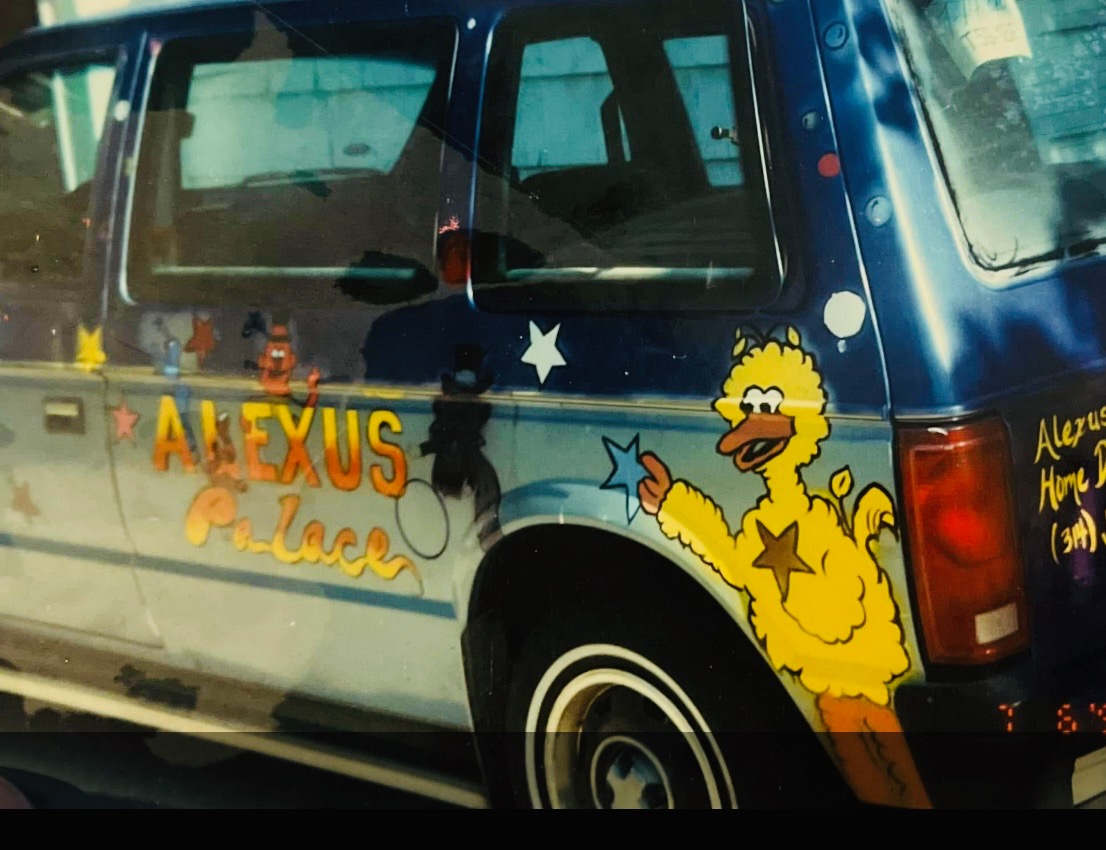
My home childcare was in Normandy for 12 years, but my advertising got me in trouble for making my home a childcare center without asking. I was doing really good in the neighborhood until I got that little rinky-dink, blue van. I wrote our name and drew all the Sesame Street characters on it. All the children helped paint it. Even if they painted outside the lines, I’d fixed it when they left. We had so much fun. When I got in trouble, they told me to shut down. And I did. My feelings were hurt, but I realized there was a way to get around the system. You can only be open for four hours a day. So, I decided to provide 24-hour service, but instead of being open from six to six, I said I was open in shifts. Eventually, I moved into a building. I didn’t want to be in trouble because I don’t like to lie. I’ll get stuck in lies.”




TINA: “We started a networking organization with childcare owners because they kept asking us, ‘What are we going to do with our teachers? The state is doing this to us... The licensing rep came in and said this to us...’ But it would be nap time, and we’d be tired, so we told them to call us after work. Eventually, once a month, we got together on a Thursday at 6:30 p.m. after all the kids had left. She named it this long thing.”
ADRIENNE: “The Early Childhood Directors Connection. But she said it was too long.”
TINA: “I said, let’s call it MOMS: Meeting of the Minds. It was catchier. Every month, we’d meet at different childcare centers. It grew from four people, to five, to thirty, and then to STAR: Staff Coaching, Training, Advocacy, and Resources for the Early Childhood Educators.”
ADRIENNE: “Once we started STAR, we were asked to bring back MOMS. It’s only the two of us, so we don’t have the capacity. The early childcare owners still wanted to meet frequently. So instead, we have a 40-person group chat.”
TINA: “If we open up our phone right now, we’d have a text from somebody in MOMS. Everything from something minute to something major.”
ADRIENNE: “They’ll ask, ‘Did you see the new licensing rules? Can anybody explain the new food program? Does anybody have diapers?’”
TINA: “In 2018, we were introduced to our mentor, a young man who would help us get our nonprofit started. He told us to do three things before we met. And that’s all we needed — somebody to tell us the steps. He was surprised when we called him back, ready to meet. Within 30 days, we were up and running.”

“We’re trying to get into the hearts and souls of educators so they can understand how they need to show up for the children in the community. We started creating trainings because of the child who got hurt at a childcare center. Not all teachers intentionally hurt children. Somebody accused this teacher of not having a degree. She had a degree; she was just triggered. So, how do we get them untriggered enough to work with children and not hurt them? We do a lot of healing circles and mirroring so they can share it with the children. Many teachers work in early childhood because they love kids or maybe some have low self-esteem. The truth is, kids don’t judge you, adults do. Working with kids is supposed to be ‘easy.’ However, without proper training, some teachers can hurt children because of their own traumas. We need these teachers to care for children and get them ready for kindergarten and life. It’s difficult to find people to meet children’s basic needs and give them the love they deserve.”

𝑊ℎ𝑎𝑡 𝑑𝑜𝑒𝑠 𝑞𝑢𝑎𝑙𝑖𝑡𝑦 𝑐ℎ𝑖𝑙𝑑𝑐𝑎𝑟𝑒 𝑚𝑒𝑎𝑛 𝑡𝑜 𝑦𝑜𝑢?
ADRIENNE: “Quality childcare means that people are seen, heard, and valued, especially the children. In my day, they used to say, ‘Stop crying, nobody wants you. Your mama is coming back.’ I thought that was normal because we grew up hearing it. But, if you always tell a child that nobody wants them, what self-concept are they coming up with? We have to watch what we say and do for children.”
TINA: “A child could think that they can’t share their emotions or feelings. ‘Yes, you can. Share why you’re crying. Let’s talk about different ways you can show your emotions.’ That’s where social-emotional development comes in. We teach that to our educators because a lot of them don’t know the different emotions. Like how ‘mad’ could also be ‘frustrated’ or ‘angry.’ There are a variety of emotion-themed toys, puzzles, and books. There are typically 10 different emotions on a classroom chart. Let’s use some of them. Some of our teachers told us that they didn’t understand this before they learned how to teach it to children. And when they teach this to children, they’re also teaching themselves.”

TINA: “During COVID, STAR developed a first responder training and PPE supply drive for childcare programs to stay open. We got resources from whoever would give them to us. Doctors came in to do COVID shots. The T helped us distribute tiny masks for children and adult-sized masks. We were in awe of the droves of masks that came in and the collective efforts in canvassing and phone banking. God used us as fishermen.”
ADRIENNE: “We knew we had to make a difference. Even if it’s just for one person. And people paid attention to us because we can relate to them. Sometimes Tina calls us FUBU: for us, by us. ”
TINA: “We made sure to keep a finger on the pulse of the community. Someone said to us, ‘Executive directors don’t need to be doing this. They should be in their offices instead.’ But, how will we know what the community needs if we’re not out here?”
ADRIENNE: “I tell people I’m not going to ask you to do anything I wouldn’t do. Our mission is built on being out there with everybody. Before offering our Child Development Associate class, I took it myself. Now I know what they’re doing, I can assist them if they need help, and vet presenters before our training to know what they will say to our educators. Some of our educators are at a different reading level, and some can read but not comprehend. Even though they work with children, they also learn differently, like children do. They may need to get up and move. They can’t sit there and listen to us talk all day. So we meet people where they are, even educators.”
“After our last class, we know we need a bigger space to be able to train 50 to 75 people. We’d also like to see educators show up for themselves, not because they may be persuaded to participate in trainings by their bosses. We’d like to see them move up in their own career paths.”
ADRIENNE: “I personally like the community we’re in because we’re on that divide between St. Louis City and the County. We work in both areas. That’s just who we are.”

ADRIENNE: “The Department of Elementary and Secondary Education (DESE) wants early childhood educators to get teaching certificates with a minimum of a Child Development Associate (CDA) requirement. No problem. Many of us have that. STAR helps educators go through the process. But when educators get this credential, they leave for the school districts to get paid more. Then we have to start over, and somebody else gets sent through school. The workforce is not stable. The early childhood education pipeline is tight. So the growth isn’t there. The field is drying up to the point where childcare centers are closing. But if early childhood were able to give a livable wage and benefits, then the field would be abundant.”
TINA: “Classrooms are empty because teachers are leaving or the classrooms are being merged. Parents want to send their children to a ‘real school.’ One of my teachers is now substitute teaching at a ‘real school.’ She goes there for the income, but she calls me every week, saying, ‘Ms. Tina, they don’t have enough supplies, and they teach from a whiteboard. It’s glamorized babysitting.’ I reminded her to teach the way I taught her, so she sings and reads to the kids. But a teacher from across the hall told her to turn on YouTube and close the door because she’s making the other teachers look bad. My teacher also asked if she could come over to get school supplies because the district didn’t have funds for them. Having an abundant amount, I said, ‘Come and get supplies for the babies.’ We do what we can for the children. If we can all remember that it’s for them, early childhood will be so much better.”
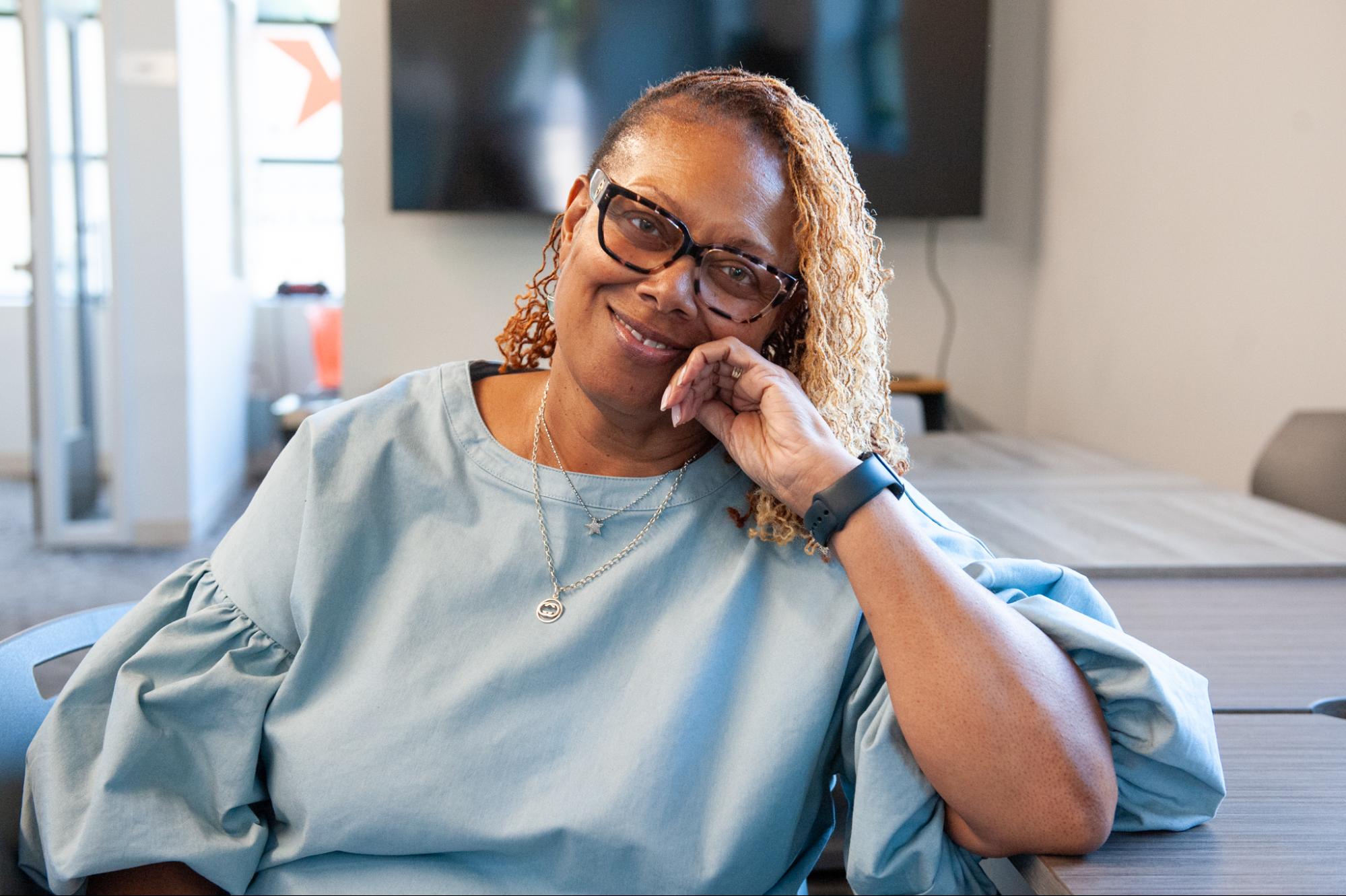
“When DESE took over early childhood, we thought early childhood educators would be looked at as a profession, just like any other teacher. There are not many professionals who can do what we do. You could be a brain surgeon or a rocket scientist, but that doesn’t mean you can do childcare. At the end of the school day, you’d leave and say, ‘Where is my stethoscope? I’m going back to work.’ This is heart work; you have to put your whole heart into it. There are days when you can feel the emotional weight when a parent comes in, too. Since I’m a family childcare provider, I can’t let a parent drop a child off without asking, ‘What’s wrong? Is everything okay today?’ Because a parent’s mood affects their child. Believe it or not, you don’t even have to ask the parent what’s wrong. The child will act out the parent’s emotion through their behavior. I’ll never forget when a child drew a picture and colored all over it. I asked, ‘Who is that?’ He said, ‘My daddy. He’s under there.’ And when we saw Dad later that day, he told me that he and Mom had separated. All I said was, ‘Have a conversation with your son. All he heard was Mom and Dad arguing, and it upset him that you were screaming. Have those conversations away from him, don’t make him angry at you for screaming at his mother.’”

“Advocacy has been challenging because it’s new to us, and we’ve had to be educated on it. Adrienne says she doesn't know anything about it, but she is an advocate. Everybody is. They just might not know it. I love Child Advocacy Day. We’ve attended for the past six years. It’s a day for child-related organizations, like Parents As Teachers, Kids Win Missouri, and Girl Scouts, to speak on behalf of their organizations to legislators in Jefferson City. We share why we need more funding and why laws need to be changed. That’s the whole point of advocacy — knowing and sharing your why.”
“A Day Without Childcare is when programs close for a day across the nation, and it lets employers know their teams can’t come to work unless they have childcare. We could get employer, private, or grant funding, but really, we need a union. Unfortunately, Missouri is one of the lowest reimbursed states for early childhood: number 48. Most programs are state-funded, but it’s still difficult for parents to afford childcare. Especially when it’s as much as your mortgage. So when it comes to advocacy, we need a collective voice behind childcare. We have to make an impact. If we don’t come together, they’re not going to hear us. ”
ADRIENNE: “Prop R will change early childcare in the City of St. Louis by bringing in more funds and resources. So the city called on STAR to encourage childcare programs to apply. And we’ve done work to help the city programs receive $300,000 from the Saint Louis Mental Health Board.”
TINA: “STAR didn’t receive Prop R funding though because our facility is not located in the City of St. Louis. However, we still helped with outreach so the other city programs could receive funding. We were given a list of people who didn’t answer the call for resources. I called and said, ‘Hey, WEPOWER is trying to reach you. They’ve called and emailed you, but you haven’t answered. They’re trying to give you funds.’ We do this because we look like them, they trust us, and we are all childcare providers.”

ADRIENNE: “As a part of the Early Childhood Tornado Response Team, we were asked to get into the streets. So we divided and conquered. I was in the field taking pictures, talking to people, getting addresses, and seeing what they needed while Tina was out getting everything else. We had someone working with the Saint Louis Mental Health Board, FEMA, and the Gateway Early Childhood Alliance to purchase tarps, board up centers, and dispatch volunteers to different programs. When we weren’t helping early childhood programs, we dispatched volunteers to help out in the neighborhoods. They gave out food and moved trees out of the way.
I remember when I was out there, they only offered people hot dogs and hamburgers. We had to make sure the little ones were getting some kid-friendly food. So we pulled some money to get peanut butter and jelly sandwiches, juices, and fruit snacks, too. I remember one man said, ‘Whoever brought the PBJ sandwiches, can you bring more tomorrow? These kids are tired of eating hot dogs.’ When you’re displaced, you’ll eat whatever someone has to offer. At the same time, we wanted to give people something that they wanted. Give them a little variety, like those Uncrustables. I like those!
Before we had this building, Tina’s home daycare was used as a hub to store things, especially PPE during COVID. We grabbed items from her basement, loaded up our cars, and started dropping off resources throughout the community. People were giving out food and basic needs, and here we’d come by with a fresh load of Pampers, wipes, hand sanitizer, and more. They couldn’t believe it. It feels GOOD to be able to help.”

“Someone once asked me, ‘What exactly does STAR do?’ Some think we’re fishermen because we’re called when people can’t be reached. He said, ‘You don’t fish. You guide people like Mary and Joseph. What led them to Bethlehem? A star.’ So we’ve been saying, ‘We’re just fishermen. But we guide people like the North Star.’ That man made me cry.”
Tina Mosley and Adrienne Pennington, Executive Directors, STAR Coaching