
Shame Could’ve Cost My Life
July 16, 2026
Shame Could’ve Cost My Life
This is a Humans of St. Louis + WEPOWER collab to amplify the stories of educators and families who are part of the childcare community. Childcare providers and workers are on the frontlines no matter what — during COVID, during the tornado, and catastrophe after catastrophe — so parents can go to work, provide for their families, and keep our economy running. We hope you get an opportunity to learn more about what it’s like to be a parent of a child who is five years old or younger, and what it’s like to care for those children at early childhood centers throughout St. Louis.
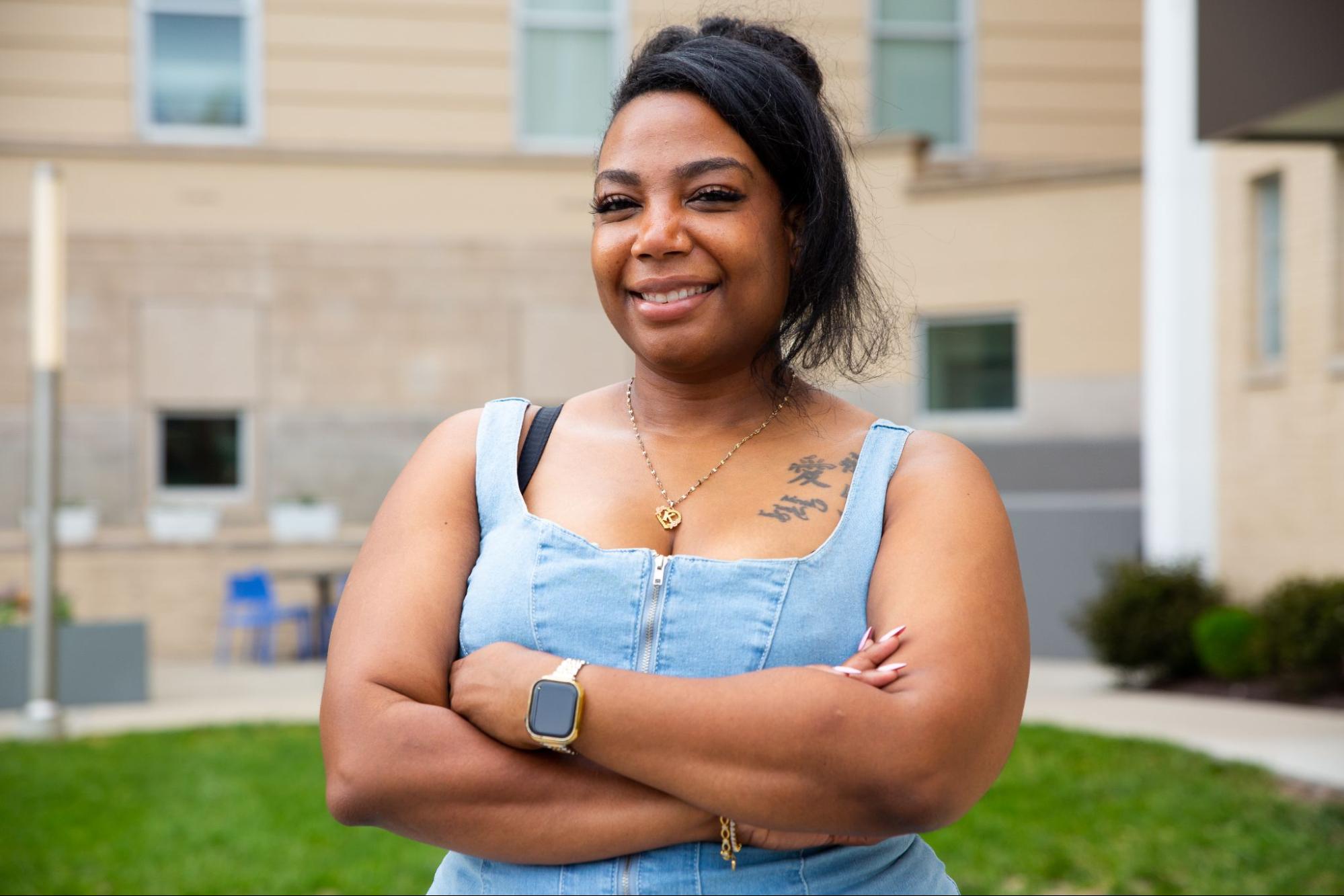
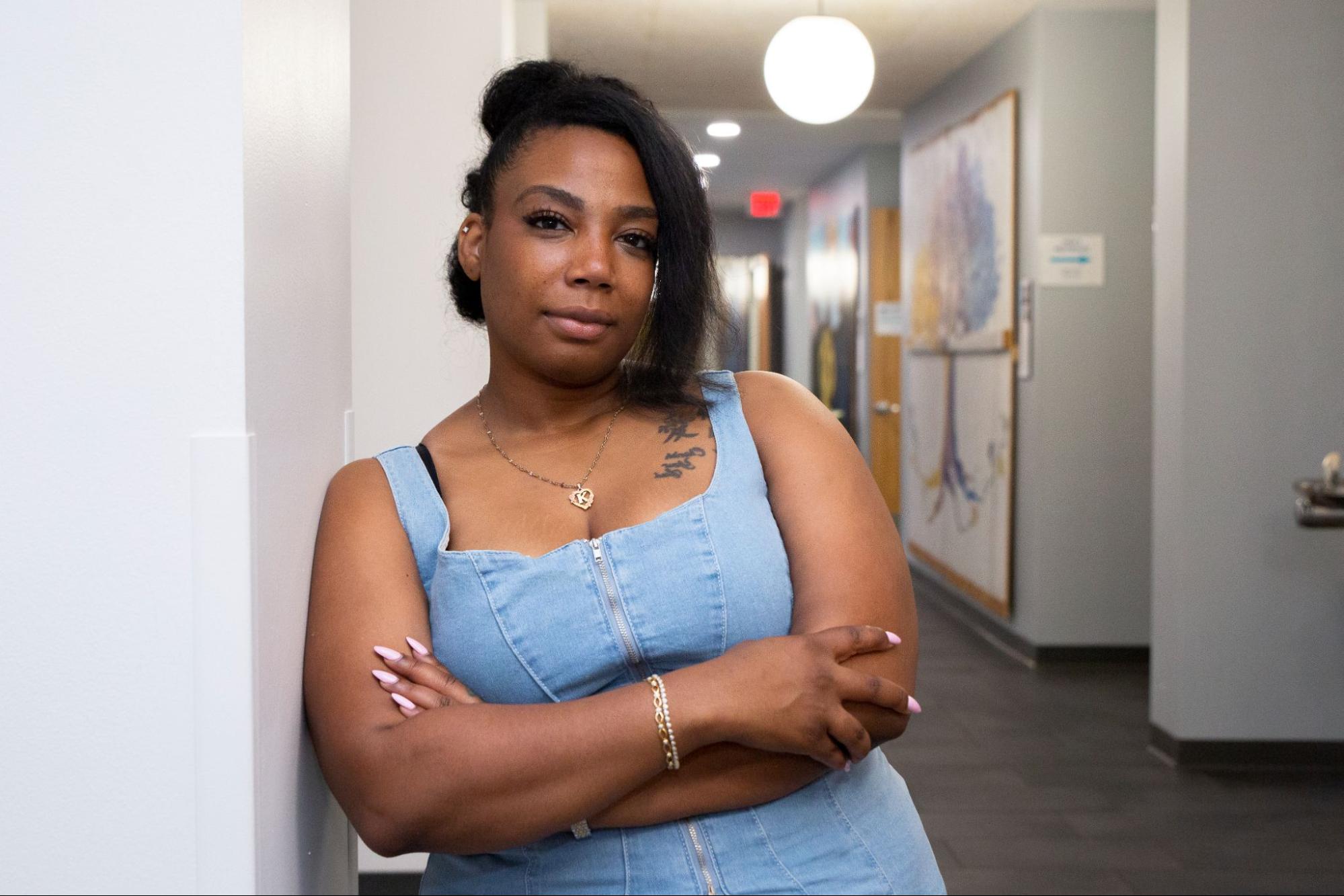
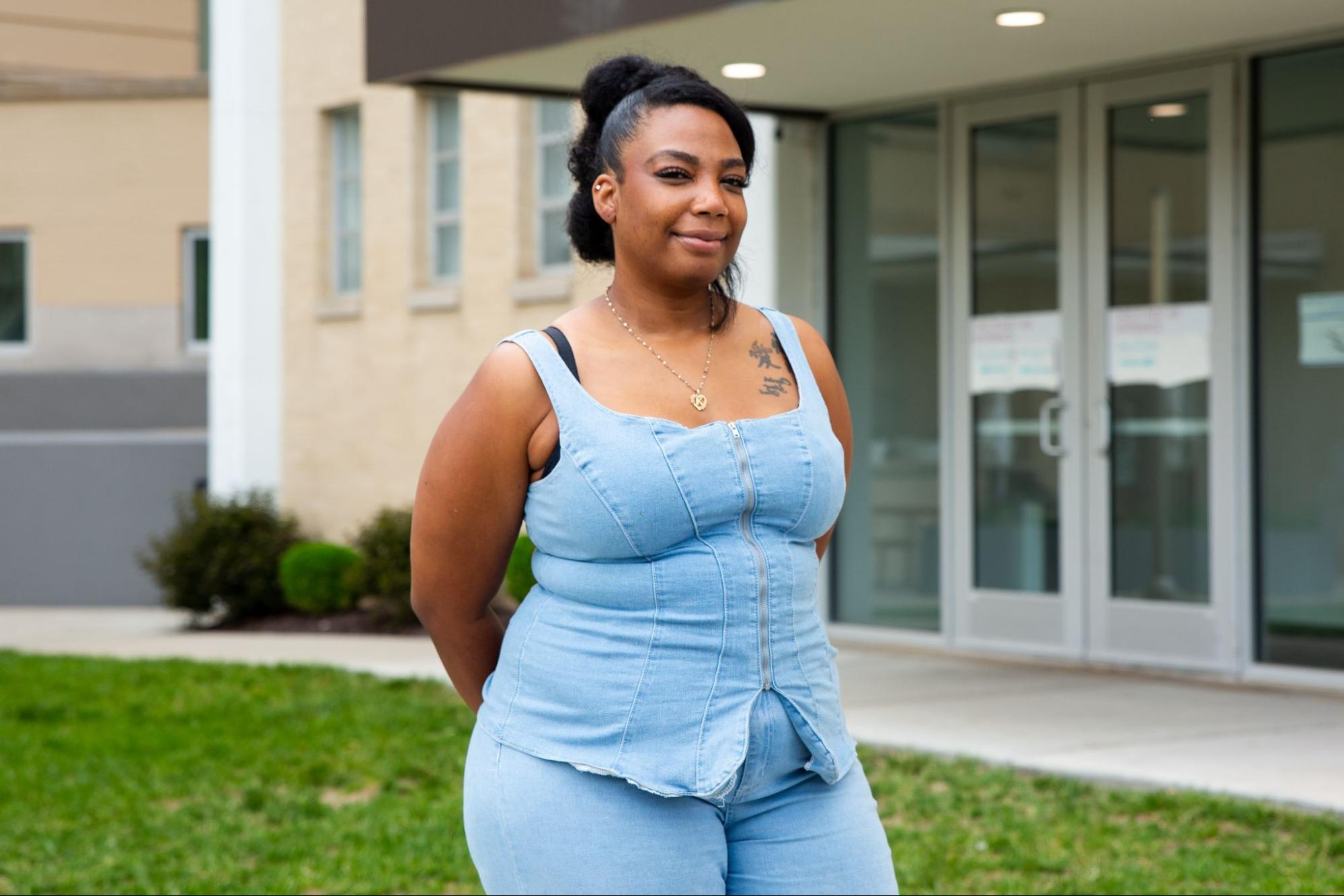
This story highlights Kyra Betts, Manager of Policy and Advocacy at Generate Health STL.
Interview and Photostory by Kiara Fite.
“At the start of the pandemic, we were all in this time vortex. Nobody knew what was happening, and I never felt so isolated in my life. A week and a half into lockdown, I found out I was pregnant. My pregnancy app prompted me to log my period, but it never came. I was inside the house for my entire pregnancy. By the time I could leave, the rules had changed. Everything was different — the way people interacted, communities gathered, and restaurants functioned. Becoming a mother in my 30s was also strange because I had a very sure sense of self, but then I had to relearn who I was in my new context: post-pandemic, post-partum with severe depression and anxiety. All of these new changes were happening while it felt like the world had changed without me.
I don’t believe people are designed to have babies in isolation. Especially Black people. Culturally, people of color have had babies in community, and my first pregnancy was the opposite. I remember sitting on my porch and talking to my mom, who sat in her car. It felt like she was still in the world, and I wasn’t. Once in a while, I’d take my husband to the park so I had an excuse to leave the house. My friends even threw me a drive-by baby shower, which turned into a block party. Yet, I was on the porch again while everybody was outside. It was helpful to see other people because, at that point, I was mostly just with my husband. But one night, I snuck out at about two in the morning to get those Grandma’s oatmeal cookies. I just needed to leave the house for a reason other than my doctor’s appointments.”

“My anxiety with my firstborn was so bad that I probably spent hundreds of dollars on seat belt cutters. Every time I saw them advertised, I bought another one. I’d even take off my seat belt every time I drove over the McKinley Bridge on my way to see my family in Illinois. I should’ve known my car wasn’t going to go over the side of it, but I just wanted to be ready in case I had to get my son out.”
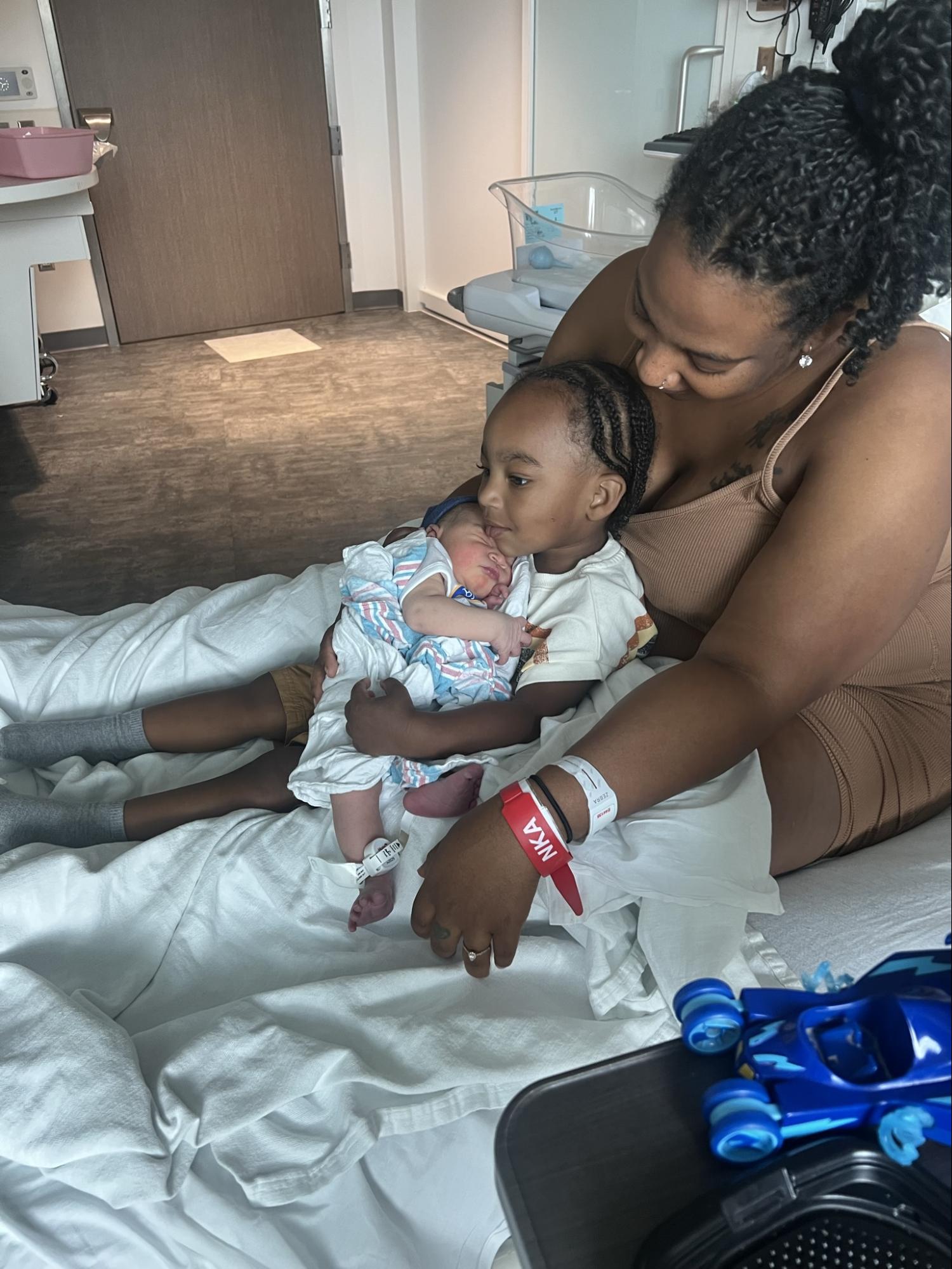
“My husband got his wisdom teeth pulled out the day my water broke. He had been in excruciating pain, so we were determined to get it done. And we thought we still had a week until I was due. After his procedure, I took him home so we could both rest. Well, I woke up to pee, and suddenly, my water broke. I wasn’t having contractions, so I knew I’d probably need an induction. Unfortunately, my doctor got COVID, so she wasn’t available, and my other doctor didn’t make it to my birth. My delivery ended up being with a resident who, instead of believing that my water broke, suggested that I had peed on myself. Mind you, I’m a doula. I know what it’s like when someone pees on themselves during pregnancy. But I was sent home. It’s funny, too, because if you look at my chart now, it says my water was broken at that visit.
At home, I tried to have a big gush break and get some contractions started. I love to dance, so that’s what I did. That next morning, I was doing the Cha-Cha Slide, the Wobble, and any line dance I could think of. Once the big gush and contractions came, I went back to the hospital, and they started a formal induction. My goal was not to use medication for my delivery, but with all the contractions, I received high doses of Pitocin. At one point, my overnight nurse was in the shower with me because hydrotherapy helps. So she was in there, scrubs soaking wet, holding the monitors to check my baby’s vitals. My other nurse was nervous about me needing a C-section or getting an epidural because I’d been in labor since the day before. Usually, they won’t let you go past 24 hours from your water break because the risk is higher for infection or stillbirth.
By then, I’d been in labor for days, and I thought, ‘I need an epidural. My body is fighting this labor. Maybe it’s just not going to happen.’ As I was giving up, my nurse gave me a pep talk: ‘You’re amazing. You’ve come this far. You’re doing this in a pandemic. This is hard, but you’re going to be fine.’ When she left to find the anesthesiologist to start the epidural process, I had a moment to myself. I thought, ‘Okay, Kyra, what is your body telling you? This is your last chance to listen to it.’ And epidurals break the brain-body connection because you have no idea what’s going on down there. But the next thing I knew, my body pushed him out like he was on a slip-n-slide, and I caught Nathan Jr. myself. Thank God he was healthy, and we both didn’t have any infections. He caused a second-degree tear, which was awful. But he has a big head, so you get what you get.”
“I’ve witnessed traumatic births, so I’d hate to call mine traumatic. But as an extrovert with a large group of friends and support system, not being able to have that around was hard. My only support system during the delivery was my kid’s father, and he was heavily medicated from his wisdom teeth procedure, so he was dozing off at times. Eventually, he ran home to take the dogs out for a bit, and somebody called in a social worker to consult with me. Usually, when they see mothers alone, they like to check in. I understood how it looked. I told her I was fine and that my partner had left to take the dogs out. She didn’t believe me. When he came back, she was quick to say that we’d been waiting for him. Reading the provider notes back, the nurse had noted how it was hard for my husband to stay awake and that he was possibly under the influence of drugs. But I told them, ‘He just had his teeth pulled out.’”
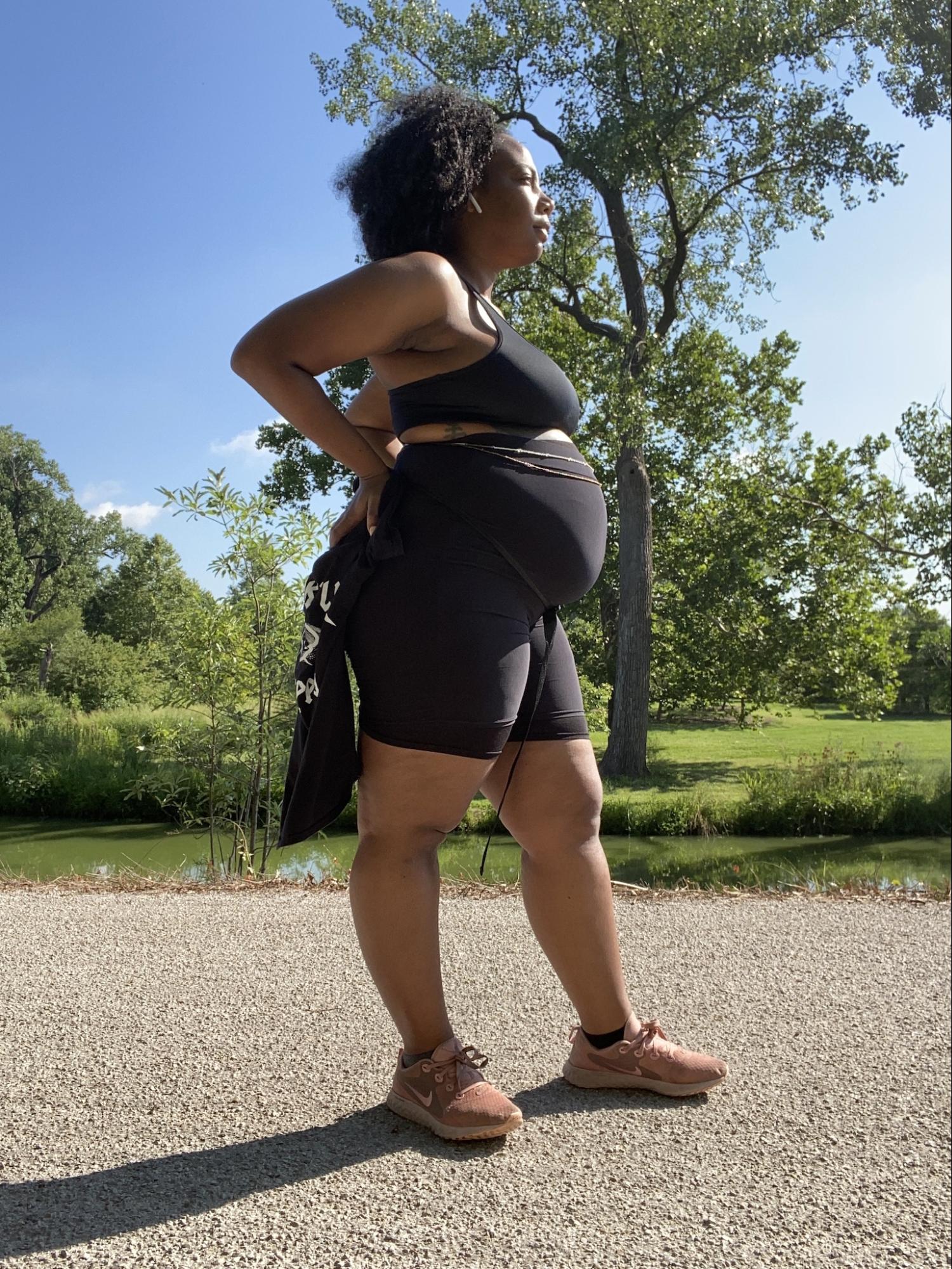
“I finally dug myself out of postpartum depression with SSRIs, and the next thing I knew, when my firstborn was 18 months old, I was pregnant again. At 14 weeks, I had a subchorionic hemorrhage, which is like if someone turned on a faucet of blood. I was sick the entire pregnancy. I threw up all the time. But I only gained 20 pounds, which was much different than the 100 pounds I gained during my first pregnancy. Because of all of this, I told myself not to be too attached, just in case I had a miscarriage. I had a really hard time mentally connecting to my baby because I was convinced, whether it be through miscarriage, stillbirth, or whatever, he wasn’t going to make it. Even after the hemorrhage, I was still working while pregnant. I had my last client in March, and then we welcomed our second son, Kyren, in May. Honestly, I should’ve been taking it easier, but I was conducting full belly-to-belly births, home births, and working with clients right up until he got here. It didn’t fully settle in until I had my baby shower, and that’s when I accepted I was going to have another baby.
We had just come home from celebrating my cousin’s graduation, both my husband and oldest son were sleeping, and suddenly, I had really strong contractions. I told my husband I was fine and we had plenty of time. But as soon as I walked away, I had a stronger contraction that brought me to my knees. What a different experience from my first labor, where my brain and body couldn’t get on the same page. Before we left for the hospital, I made it a point to lie with baby Nate for one last moment as my only child. And I didn’t have a single contraction for those 15 minutes we were together. Then, as soon as I stood up, the contractions started again. It seemed like whenever baby Nate was by my body, I had no contractions. So when he got out of the car and into my granny’s house, the contractions started again. ‘Please, immediately bring him back!’ I thought.”


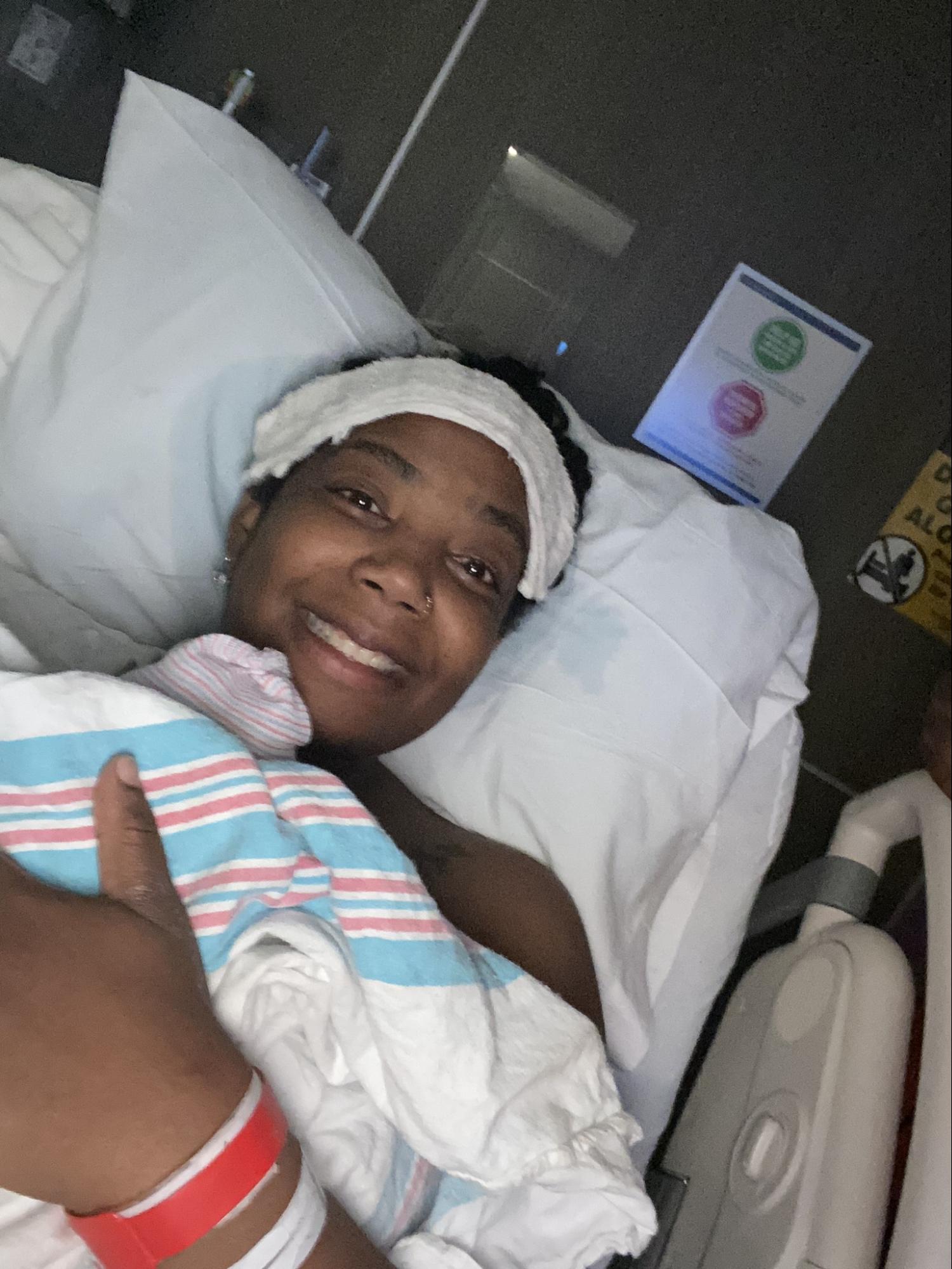


“Last year, I went in to get checked because I thought I had an inflamed pelvis giving me pain for days. My doctor said, ‘Just humor me. Take a pregnancy test.’ And I do think I am a comedian, so fine, I humored her. She came back and told me I was pregnant, but that I had to get to BJC immediately for more testing. It was then that I found out I had an ectopic pregnancy and had to get emergency surgery. It all happened so quickly. But luckily, the doctor I chose for Kyren’s birth was there and helped me navigate it all. She knew what I wanted and that I would want to take both of my tubes out to avoid the risk of a future pregnancy. Nathan was at home with the boys, so she sat with me through the pre-op process. Doctors get busy, so I didn’t expect her to stay the whole time. But I wish all providers could do that. That’s the power of being able to choose care. I knew I had chosen the right person. And I also knew that my body was done having kids.”
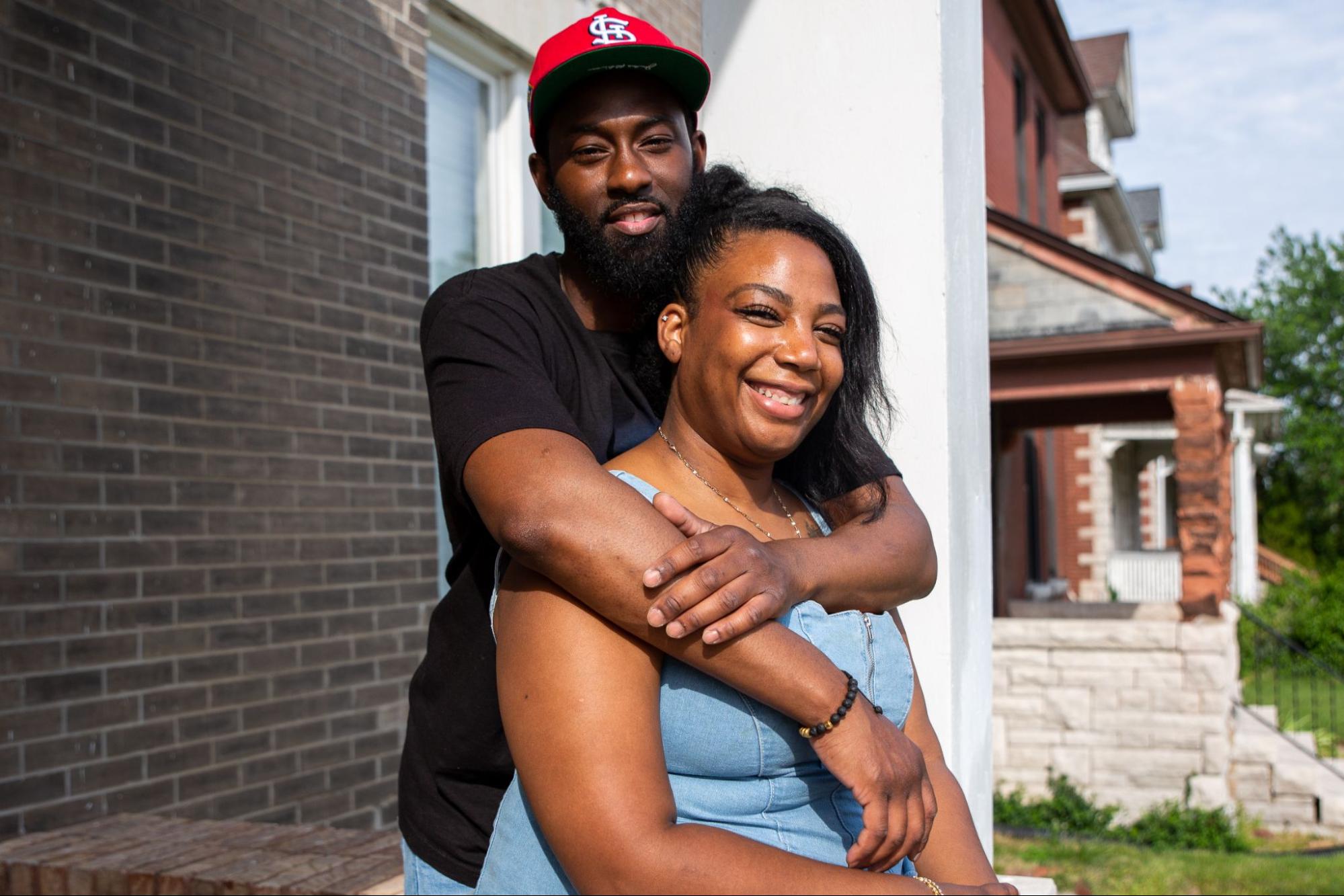


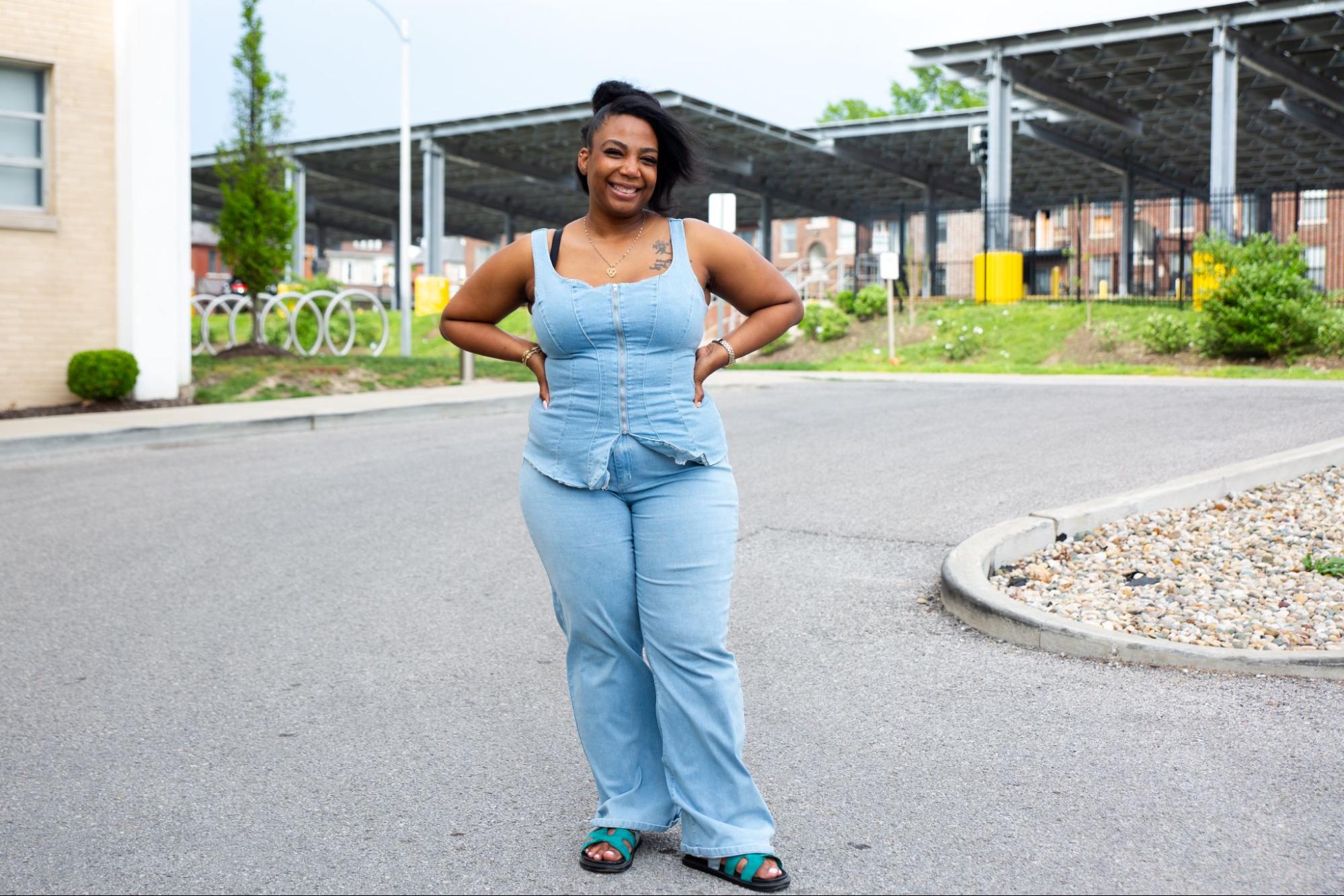
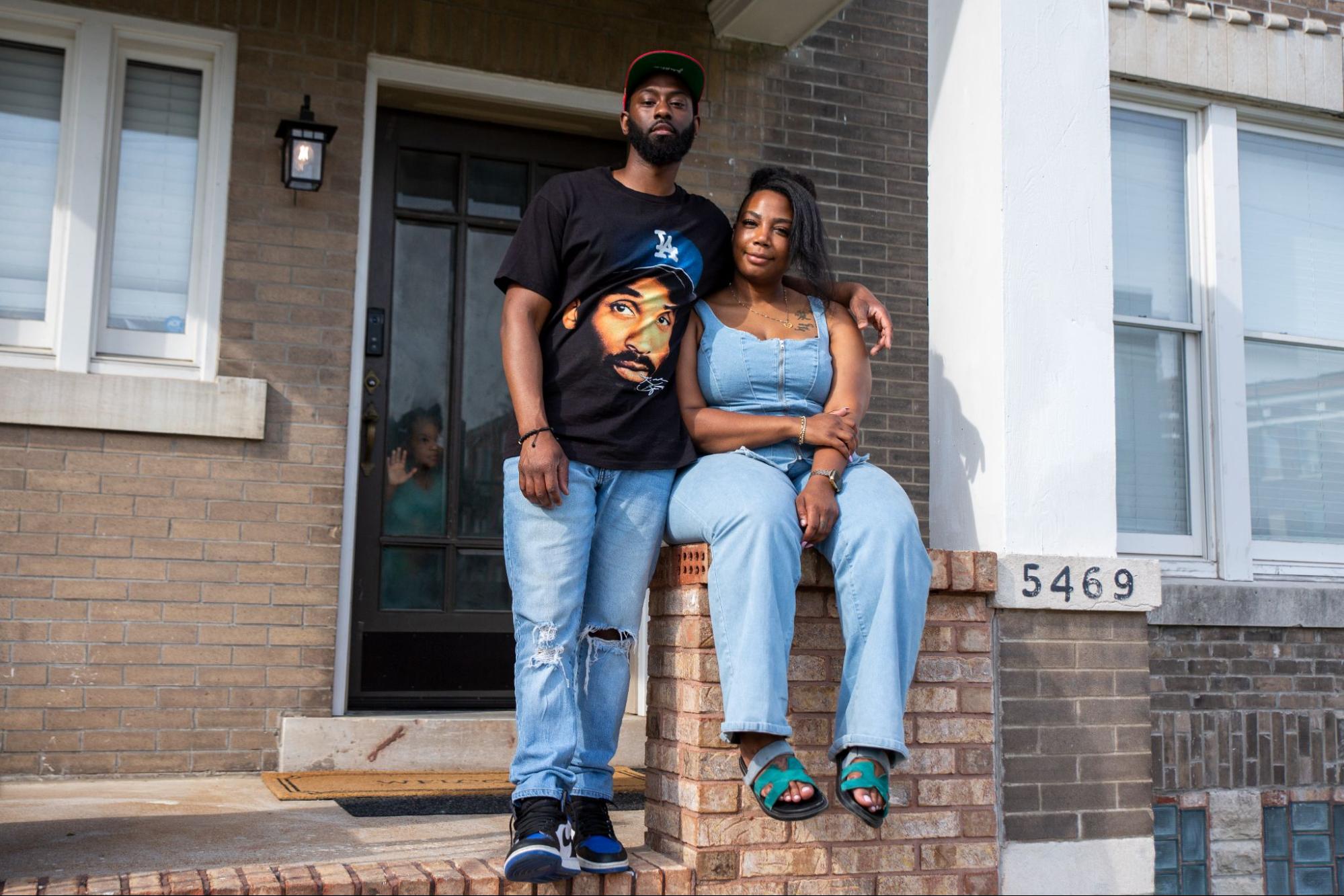
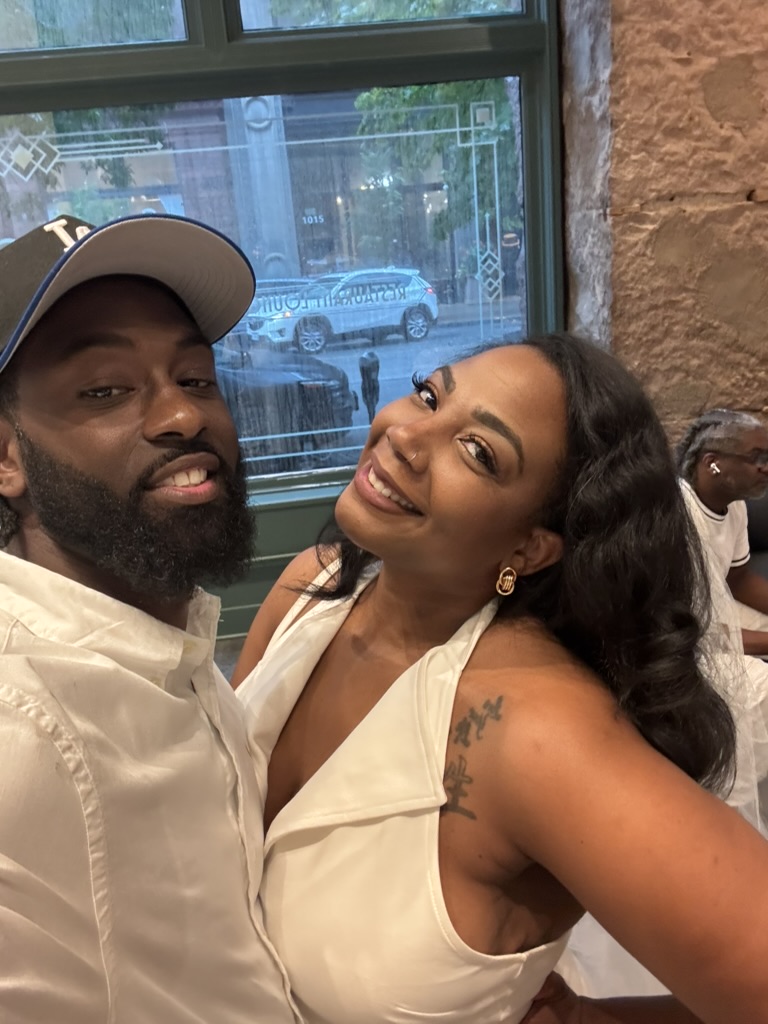
“My husband, Nathan, and I have been together for eight and a half years now. I went to Southeast Missouri State University, and he went to Harris-Stowe. We met in passing once through a mutual friend. Years later, after my 29th birthday, he messaged me on Facebook. I told him I knew he was always in love with me, and that he just had to find a way back into my life. One of my friends was actually his tenant at one point. Nathan lived upstairs in his grandmother’s old house and rented out the downstairs. And he told me he’d seen me there, which was weird because I didn’t think a man lived in that house. We started talking, hit it off immediately, and here we are now, almost 10 years later. Interestingly, we both graduated from Hazelwood East, but didn’t know each other. It was only when I was riding with him to his mom’s house that I realized we grew up in the same neighborhood, too. We met at the right time because if we had met earlier, we might not have been right for each other. I never cared about getting married, but we just got hitched last year in Vegas. It’s funny how he tricked me. We saw Beyoncé, and he proposed at the concert. Little did I know he already had the wedding in mind for the next day, which another friend of mine helped him plan. So we got married very quickly.”
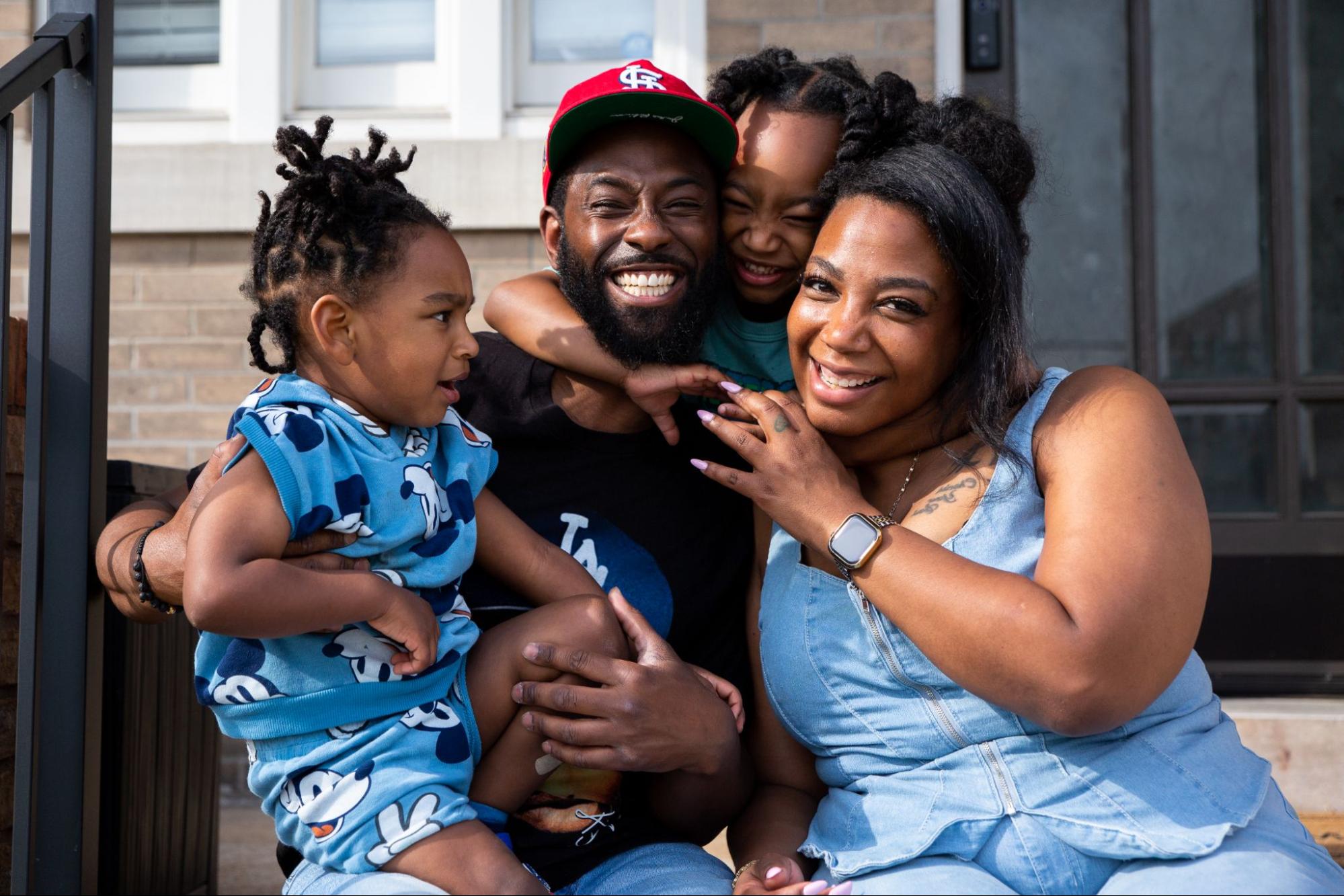
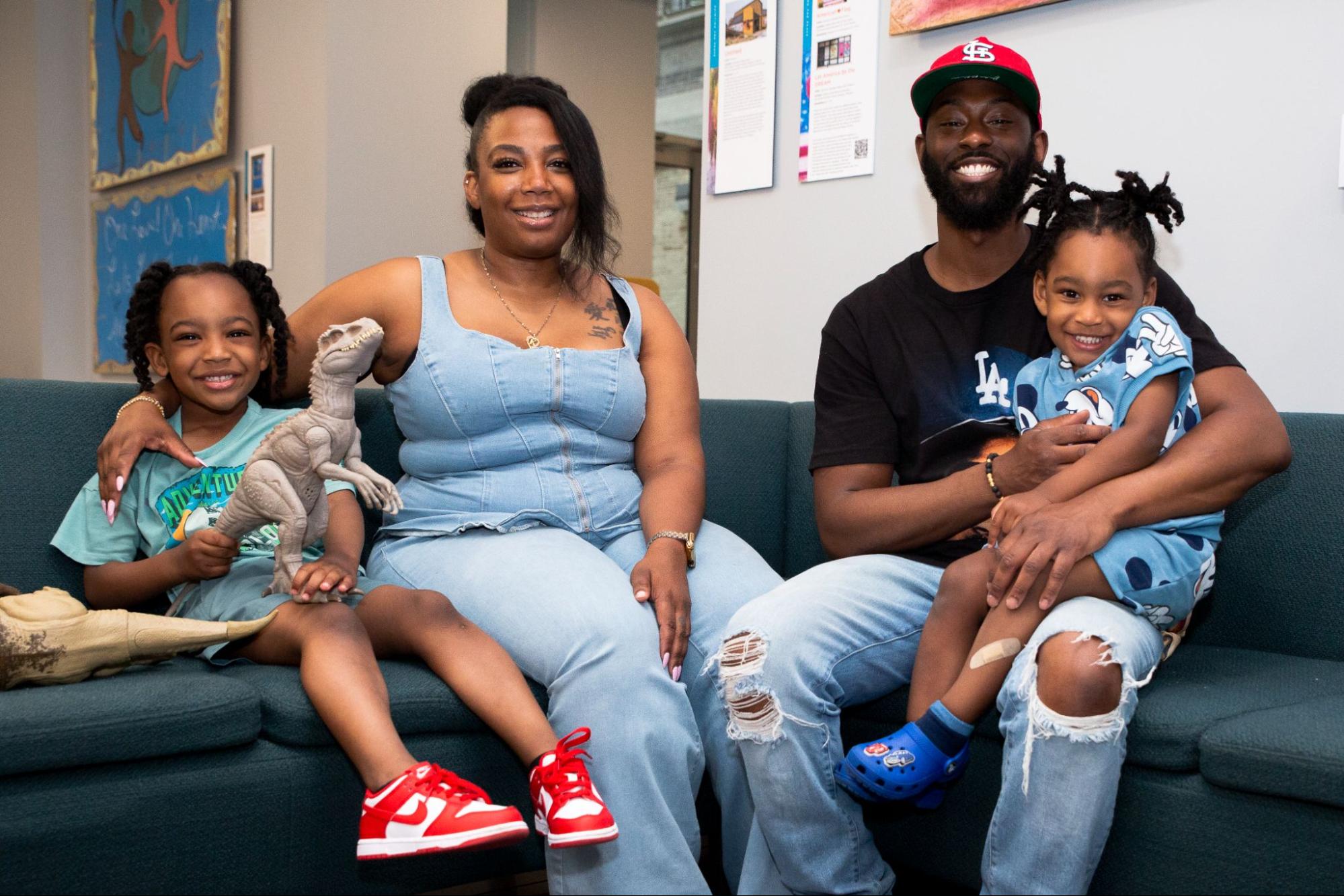
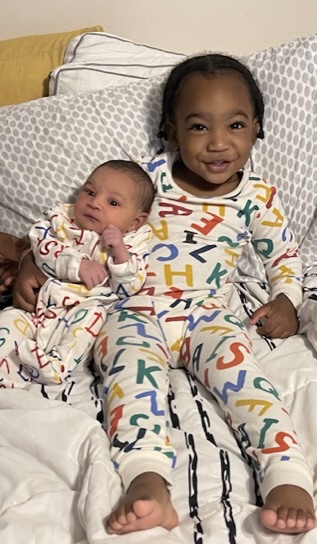
“There’s no name diversity in our house. Everybody’s name is the same: Kyra, Kyren, Nathan, Nathan. Nathan Jr. is five and a half. He’s serious about the half. Then there’s Kyren, who’ll be three next month, and he was a little button in the family. I had two boys and said, ‘No, thank you, I won’t be having a third.’”
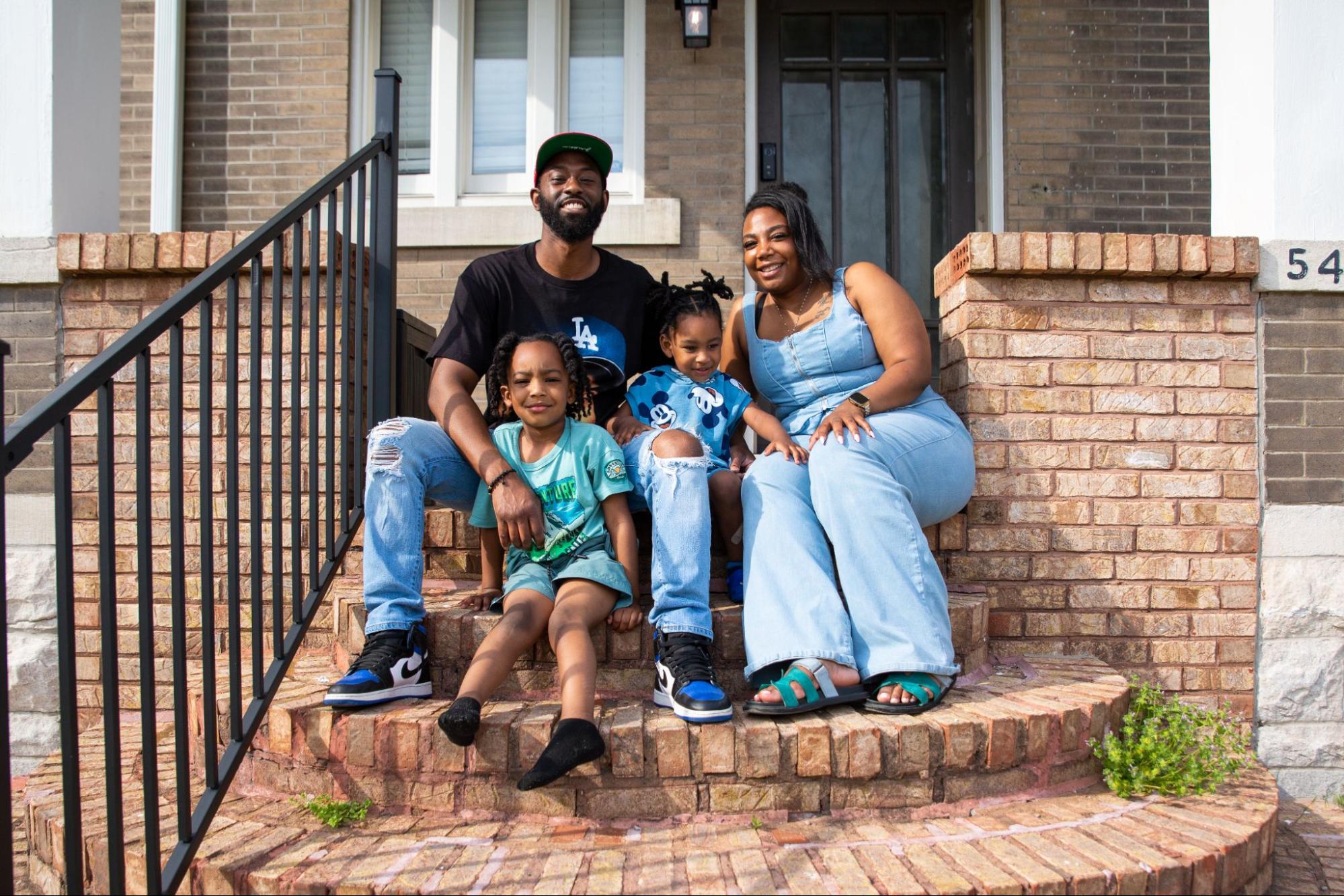
“I sometimes wish I knew how to be more passive and just let things happen. Nope! We have to build a volcano, do this activity, put this thing together, draw pictures, and use our brains. Being as involved as we are as parents definitely put some strain on us. But we weren’t beefing with each other; we were beefing with life. The kids just stopped sleeping in our bed. They have beds in their rooms, but every place in this house has been slept in. Sometimes you’re sleeping on a couch, sometimes in the kids’ beds, sometimes ours. One of us might be all the way upstairs with one kid and another downstairs. Sometimes, no one is sleeping in any bed. We just end up wherever we end up.
For so long now, there’s always been a kid to consider in our plans. Mother’s Day, brunches, movies, dinners. We have a support system, but it takes a lot of effort to get two kids ready, drive them to my mom’s, drop them off, and pick them up. It’s like, ‘Just forget it. They can come with us.’ Only recently has Kyren become more comfortable spending the night at my mom’s. The first time, he kept walking my mom to her door, saying, ‘Go home now.’ Now that the kids are gone all day, we’re noticing how quiet the house can be. And I’m not breaking the silence. We’ll both sit in silence. Nobody is mad, but we’re trying to take these moments to catch our breath and unwind. After five years, we’re just now trying to refind our partnership by getting some structure and time back for ourselves. It’s going to continue to be important. We aren’t there yet, but we’re working on it.”
“As a doula, I don’t make a lot of money, and I couldn’t take that much time off after I had Nathan Jr. My husband was working 60 hours a week selling cars, and I started back with my first client five months after giving birth. I’d take baby Nate to my appointments because it was difficult to find affordable childcare in our area. Then, with Kyren joining the picture a few years later, I had both of them coming with me to work when I was doing births, meeting with and bringing on new clients. I had also just begun public speaking about maternal and infant health and policy. Eventually, I was invited to a Respectful Care Luncheon hosted by Generate Health, SSM, and BJC. I was also scheduled to interview with Generate Health days after the event, and I knew my interviewer would be at that same event.
At the time, Kyren was three months old and wouldn’t let me out of his sight. Honestly, I figured no one would want to hire someone with a three-month-old and no prospects of childcare in the near future. I thought it was best if they found that out sooner rather than later, so I brought him to the luncheon. At the event, I shared my perspective as a mom and doula about my experience with finding care. I also introduced myself to my interviewer, who immediately looked straight at Kyren. My stomach dropped. She said, ‘Well, who is this?’ and took him out of my arms so I could eat while she walked around with him. That was such a relief.
On my first day with Generate Health, I didn’t bring Kyren to work, and I was asked about his whereabouts. I said he was at home with my mom. They were so accommodating, they told me, ‘If he needs to come with you, he needs to come with you.’ So from the time that Kyren was three months, and Nathan was two, they’ve both been running through these halls. The people at my job have helped take care of them and watch them. My kids grew up in this building, and everybody knows them.”
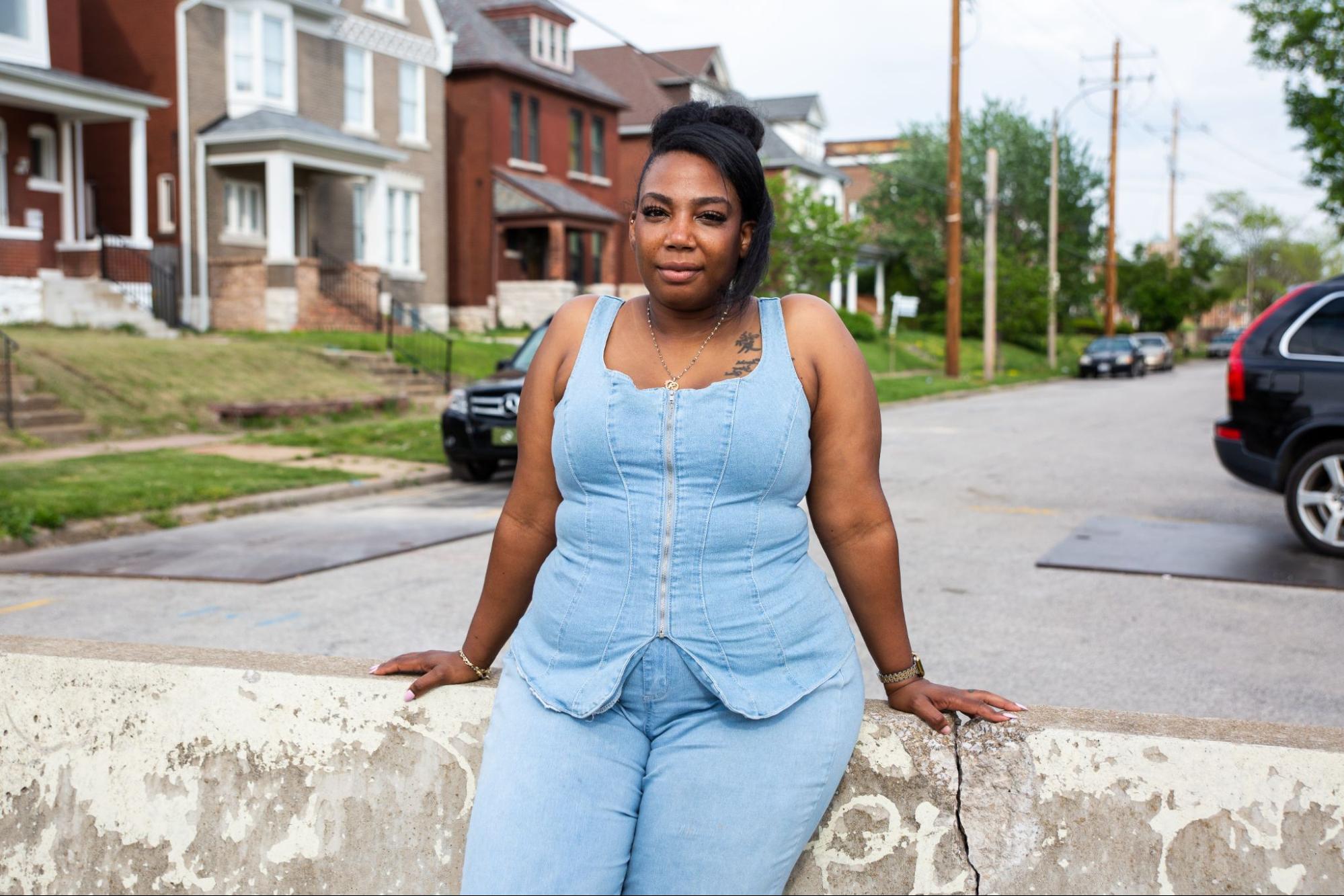
“Women are expected to navigate motherhood, have a career, be ambitious, and sustain relationships and friendships with very little support. Yet, it feels like I have to choose which one of these is most important. I’m fortunate to work in places where my children are welcomed, and there’s an understanding of how difficult it can be to find childcare. Additionally, I’m really good at building bridges between the community and policy while advocating for child and maternal health. If I weren't good at my job, people would’ve criticized me for having loud kids in these spaces.
Everything I do is important to me; I can’t choose one. The world isn’t designed for me to be exceptional, ambitious, and a mother. So many women sacrifice motherhood or their dreams, and I refuse to do that. This decision makes my life complex and difficult, but I can’t give up. My goal is to create systems that are more supportive of Black mothers and children because I’m a Black mom and a Black child. This work is crucial. Imagine how much better the world could be if we had women, specifically women of color, who are mothers at the decision-making tables?
Being a mother, while difficult and crazy as hell, has made me a better person. It’s made me more empathetic, strategic, and better at time management. But the world would have me choose one or the other before allowing us to do it all. You truly can have it all. It’s hard as hell, but it doesn’t have to be. Our systems could be better. Childcare could be more accessible. We could have parental leave that allows time to adjust to parenthood. Why do we have to beg for things other developed nations have? Against all the odds, I was able to finish a master’s degree, become the Policy and Advocacy Manager at Generate Health, lead as the Vice President of the Doula Lab Pregnancy Resource Center in Southern Illinois, and create and facilitate the Dads to Doulas program that is now across 42 states and five countries.”
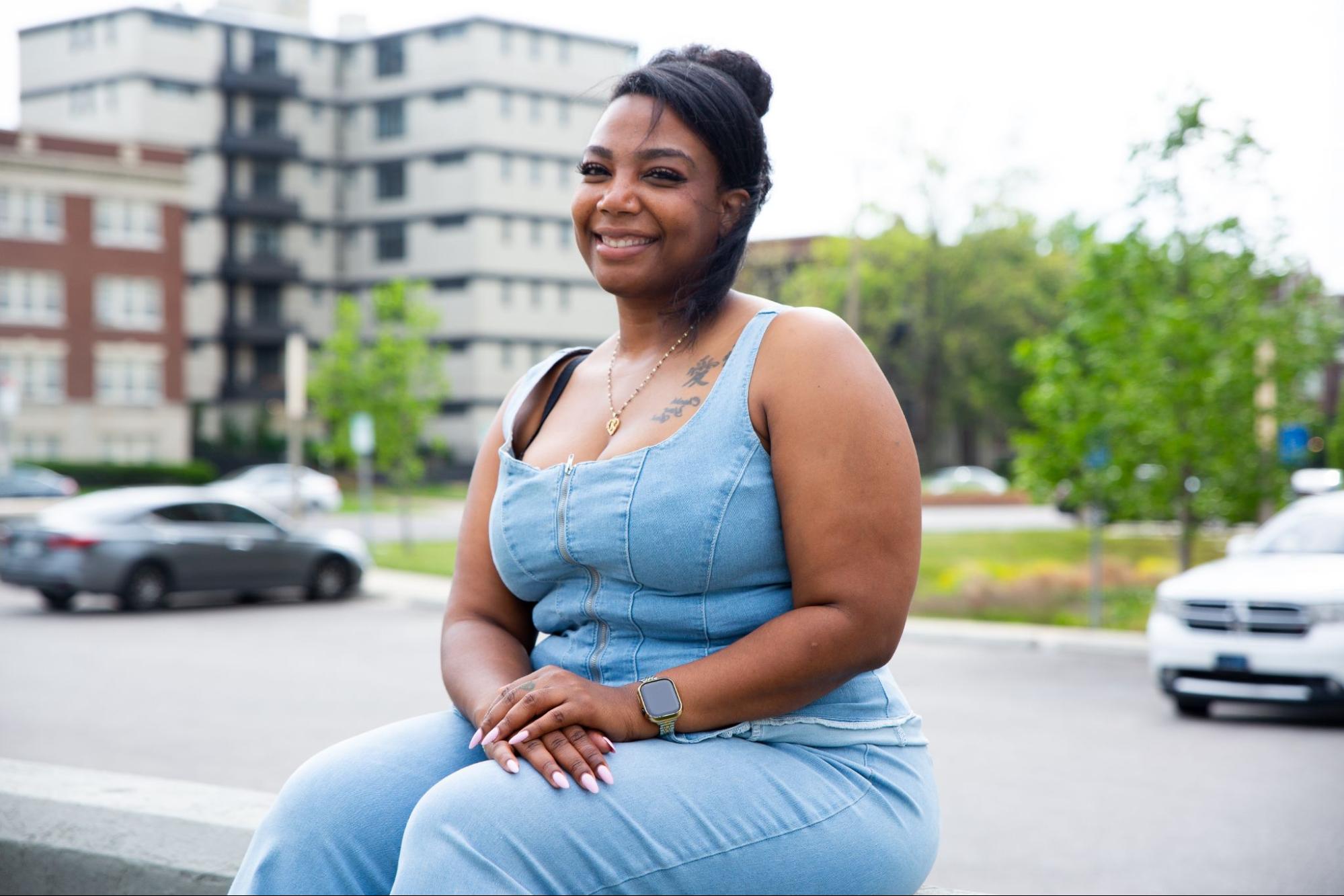
“I like to say that I have three jobs, two kids, a PhD program, a husband, and damn near a partridge in a pear tree. I’m ambitious to a fault. You could ask me to take on a project right now, and I’d say yes. Do I have the capability? Absolutely. Do I have the capacity? Probably not. But that’s how my calendar gets so filled up. So I’m adamant about my Sundays being for me, and my mother-in-law will take the kids. I usually find a way to fill that day with work or friends. Life gets so busy, but my friends will make an effort to see me. So a Sunday Funday for a brunch, day party, or just hanging out is what I need.”
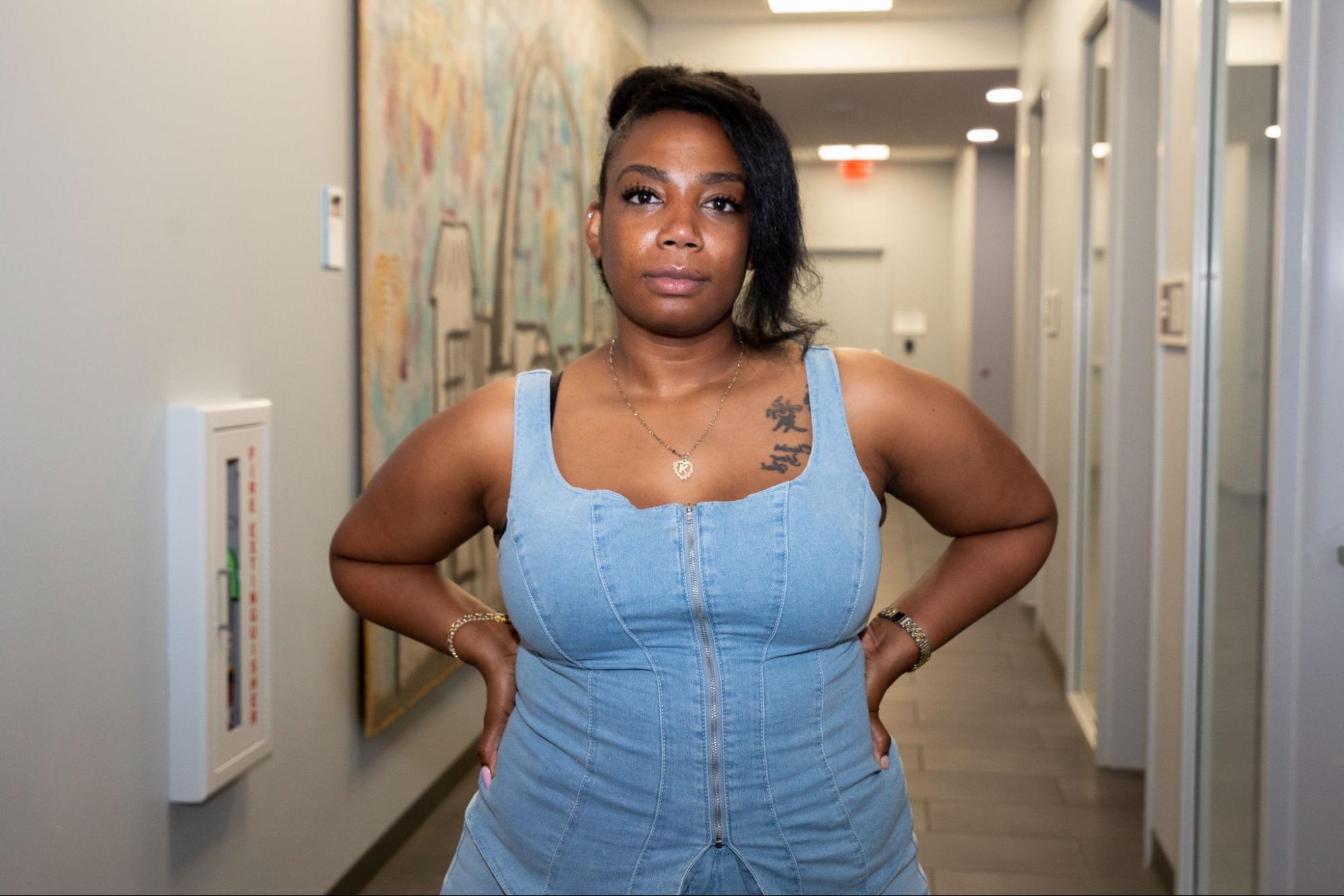

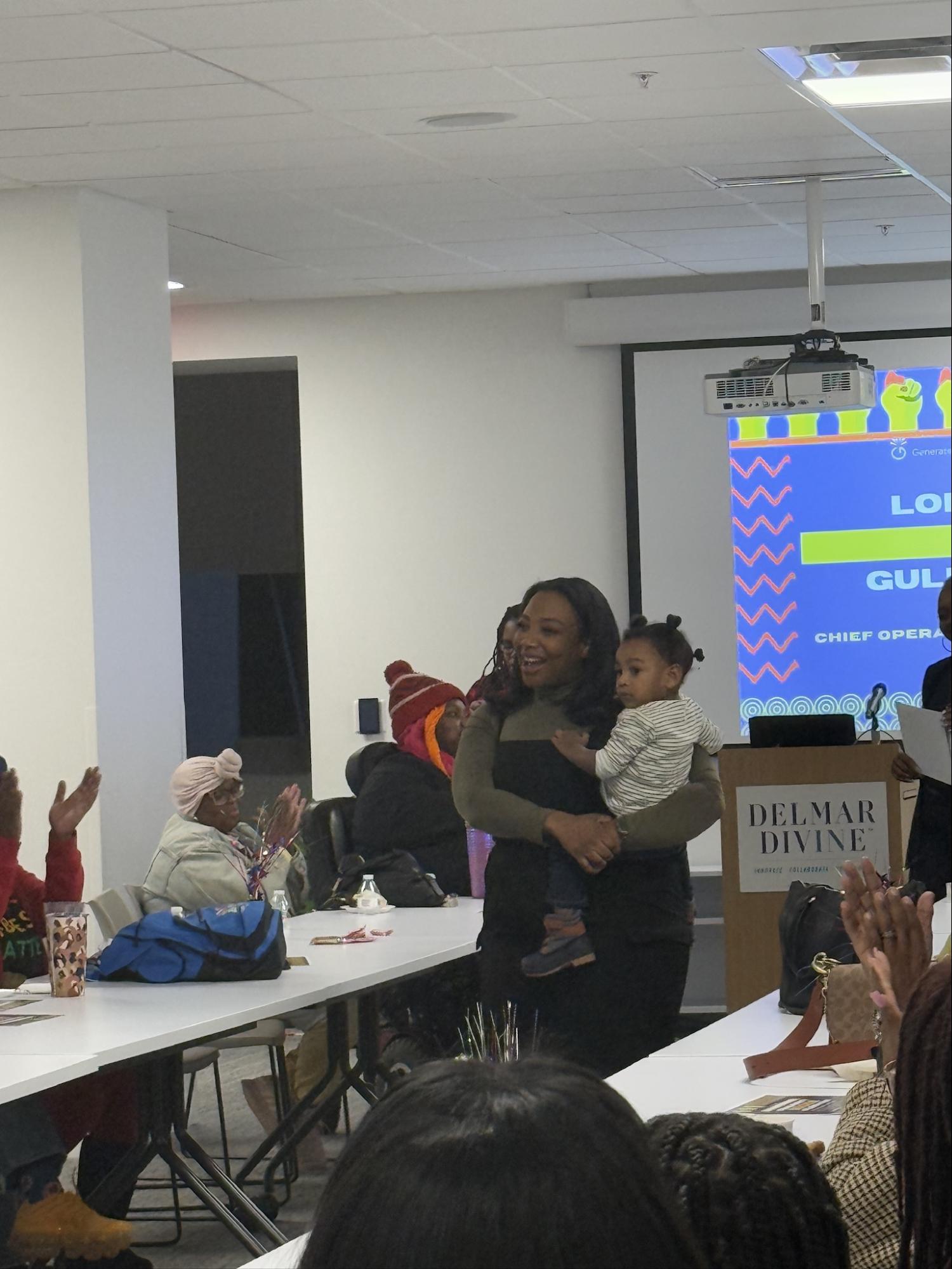
“I’m currently working on my website, and I need to find pictures of me speaking. In every picture I’ve found, there’s a baby on my hip and usually another by my legs. My kids don’t care about me speaking to these people; they just want to be close to mom. And that was my life with no childcare. Five years without childcare meant that there was at least one child with me at all times. My post-partum anxiety created a whole list of expectations for their school. I wanted it to be good, safe, and affordable. I had to love the teaching style and curriculum. So I found a handful of spots that my husband and I liked. For over a year, we found ourselves on multiple waitlists and even ‘expiring’ from them. There’s this assumption that after a year, you would have found something, and if not, you’d have to renew your spot on the waitlist. But there was nowhere for our first child to go.
Preschool was the first school we were able to secure for him at four years old. Even when we found Nathan a spot, we weren’t guaranteed one for Kyren. When Kyren turned two and a half, I got accepted into a PhD program at Washington University. Luckily, Urban Sprouts was a school we’d been waitlisted at, and it had spots saved for WashU students, so we enrolled Kyren. Still, childcare is expensive. Right now, I pay $2,500 a month for their schooling. That’s after a discount, and that’s more than my mortgage. Now we’re trying to find a kindergarten, and we have to go through all of the options. Will we do public, private, or charter? There are so many options, but where the hell were all the options for early childhood?”
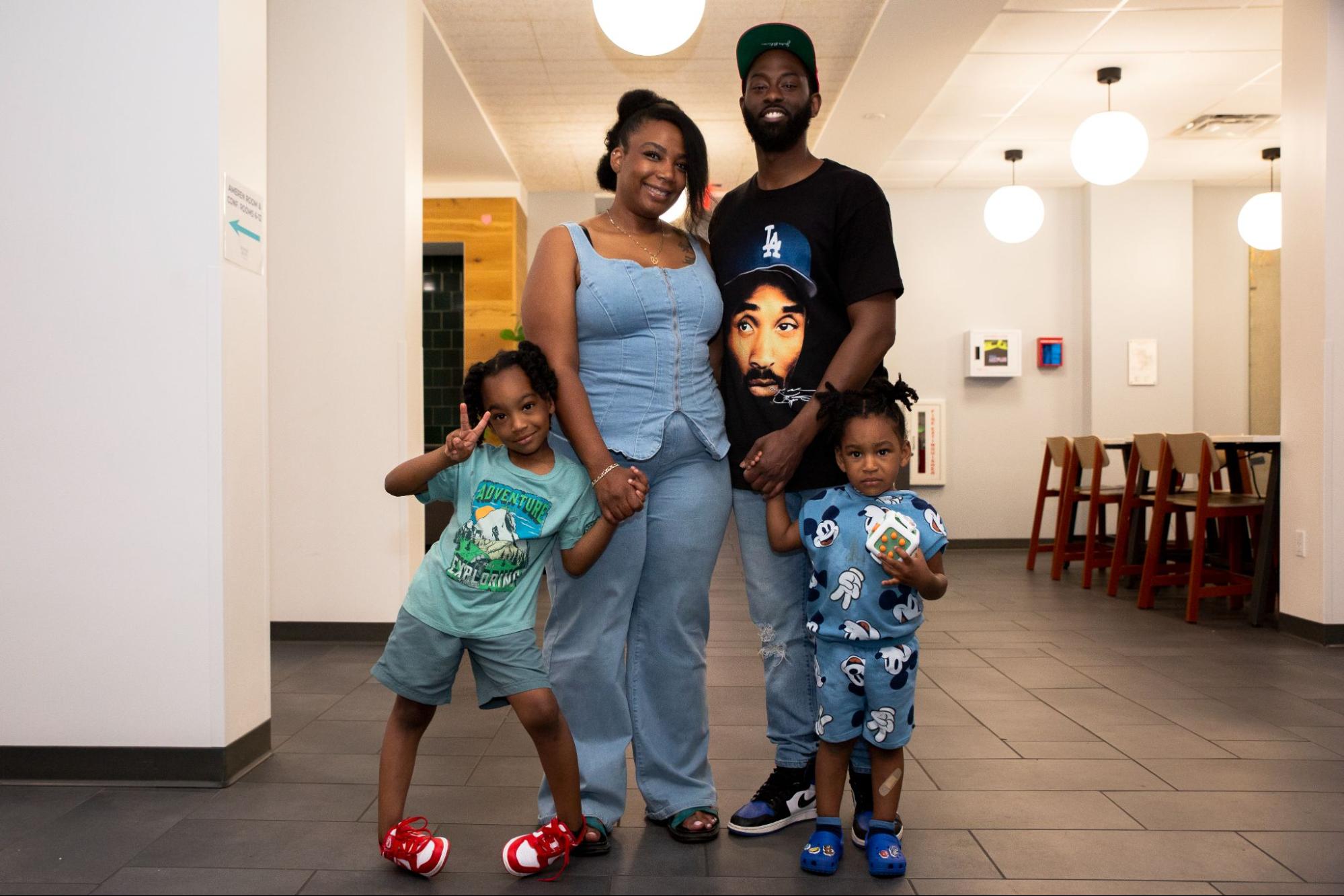
“At one point, everything felt so hectic. I had one mobile child and another who, if he could repatriate himself inside of my body, he would. I’d be working from home, and they’d be down for a nap. In those quiet moments, I would have to go to the bathroom and have a really good cry. I had to remind myself, ‘This phase will not be forever. Eventually, they’ll be old enough to be independent and go to school. We just have to stay the course.’ Last year, Kyren and I had the same first day of school on August 28th. I had a good, ugly cry after I dropped him off because I realized that, finally, after five years, I had some freedom. I could talk to adults throughout the day without having to baby-talk. So I was sad for a moment, and then I had to suck it up and go to school.”
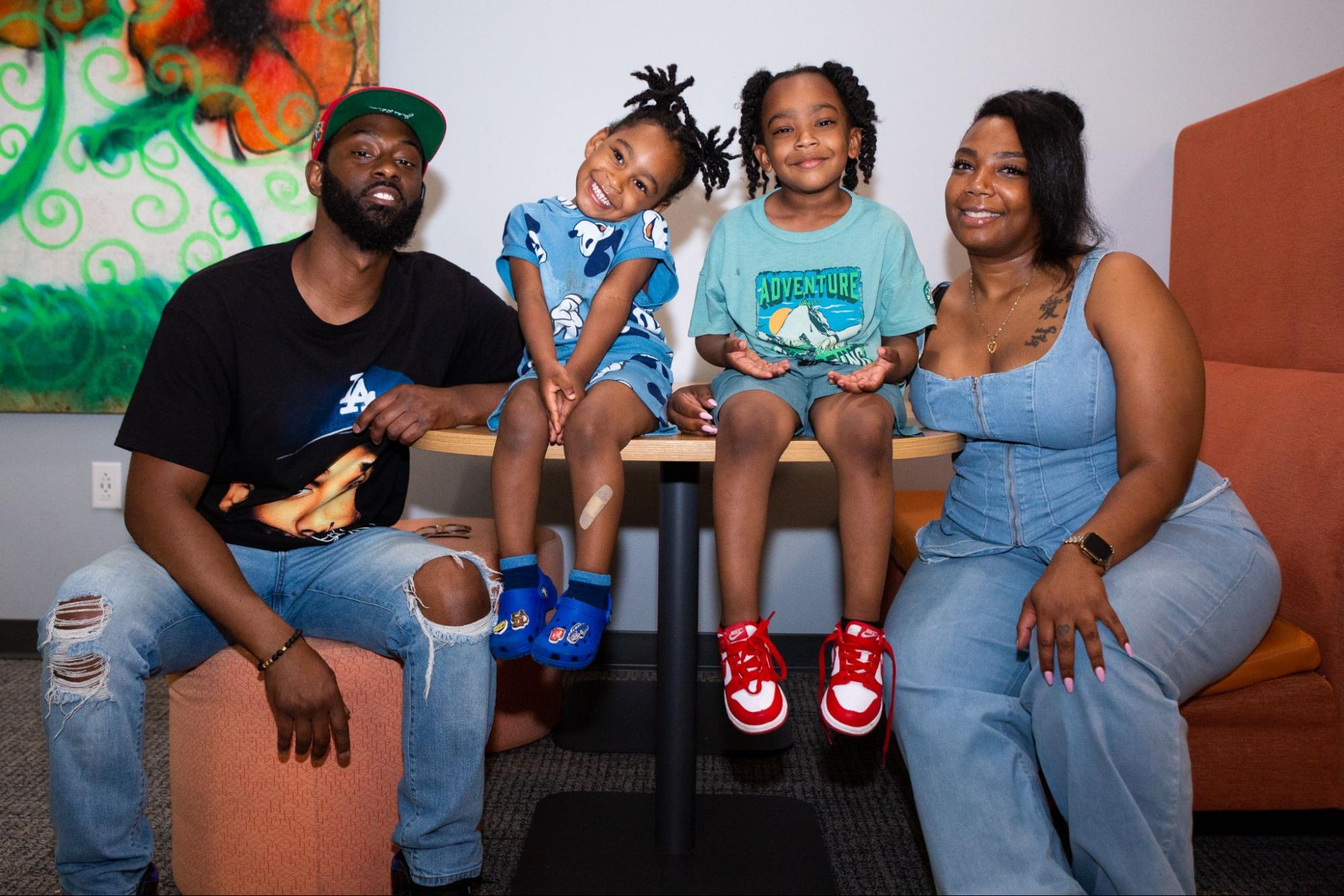
“I want my kids to be in places where they’ll be cared for and be psychologically and physically safe. We don’t live in the safest times to be sending kids to school, and I have a lot of anxiety about that. Their dad defers to me for early childhood decisions and child development. I appreciate that. However, it means that all the big decisions are mine to make. Can’t somebody just tell me what to do? Can’t it be easier to find and secure childcare options? It’s wild that if you knew you wanted to have a baby in the next year, you’d already have to be on a waitlist. And that doesn’t even guarantee you’d get a spot in the upcoming school year. The world isn’t set up in a way that supports families to have kids, careers, and a full life. The systems that should be supporting parenthood aren’t getting any better, so I understand why some people don’t want to have kids. Way before I became a parent, I knew these systems were broken. I just had no idea that they were ‘five years worth of us not having childcare’ broken.”
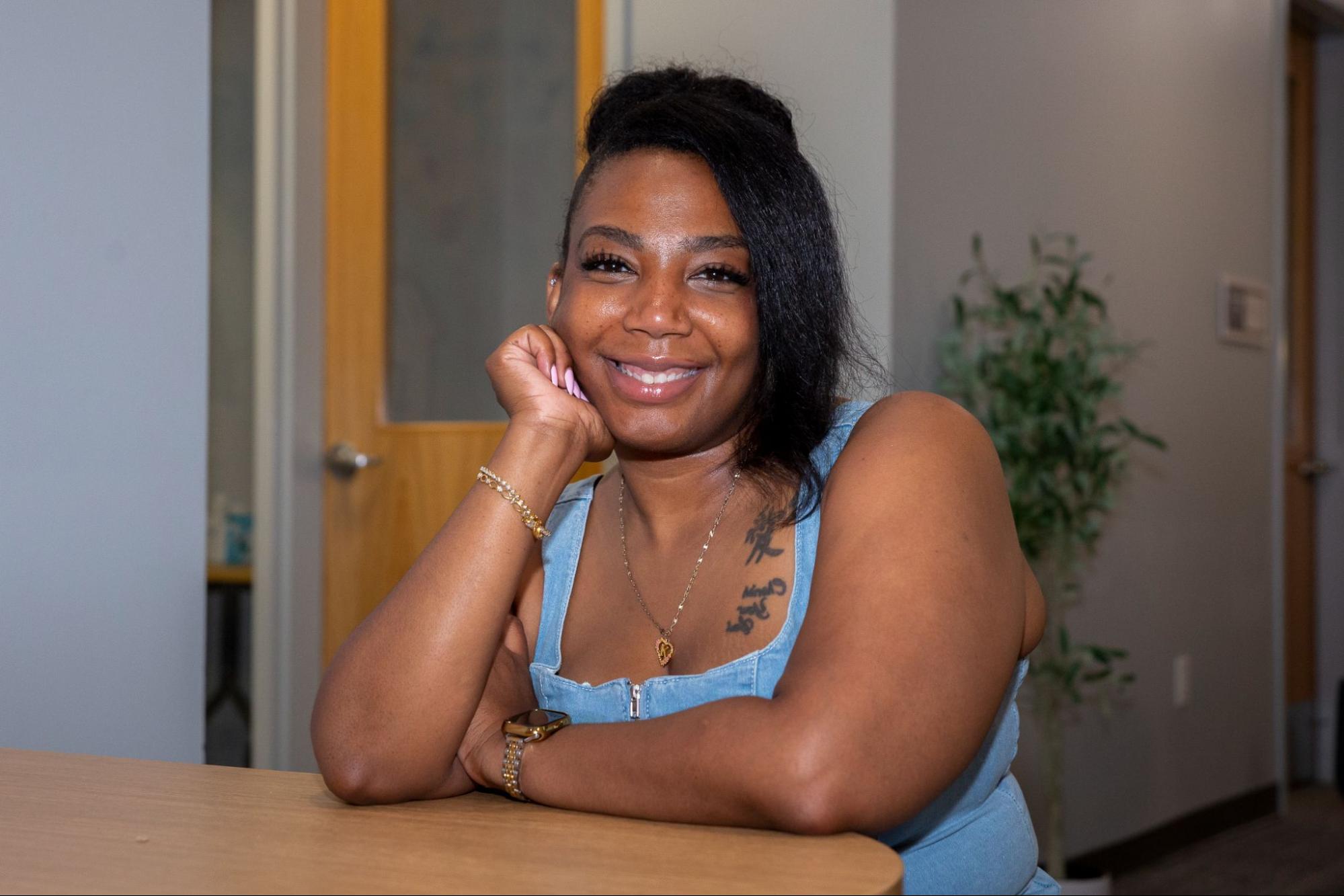
“I remember walking home from work thinking that it looked really dark outside, so a storm had to be coming. Not too long after I got in the house, I received an alert from WashU, which was my only warning. There were maybe two minutes between the alert and the tornado picking up. I was on the third floor of my house, running downstairs to the basement with two sleeping kids. My husband was home, too. But, you know, fight, flight, or freeze? He was frozen. We’ve both lived in St. Louis our whole lives, so we were taught that a tornado couldn’t hit the city. And it was terrifying to experience. Our basement walkout door was rattling so hard we thought it was going to come off. All of our ears had popped, and my kids were screaming. Once things settled outside, we had no electricity, our fence was blown down, and trees and power lines collapsed in the alley. We were trapped on our street for hours. It took us over a week to get our electricity back on.
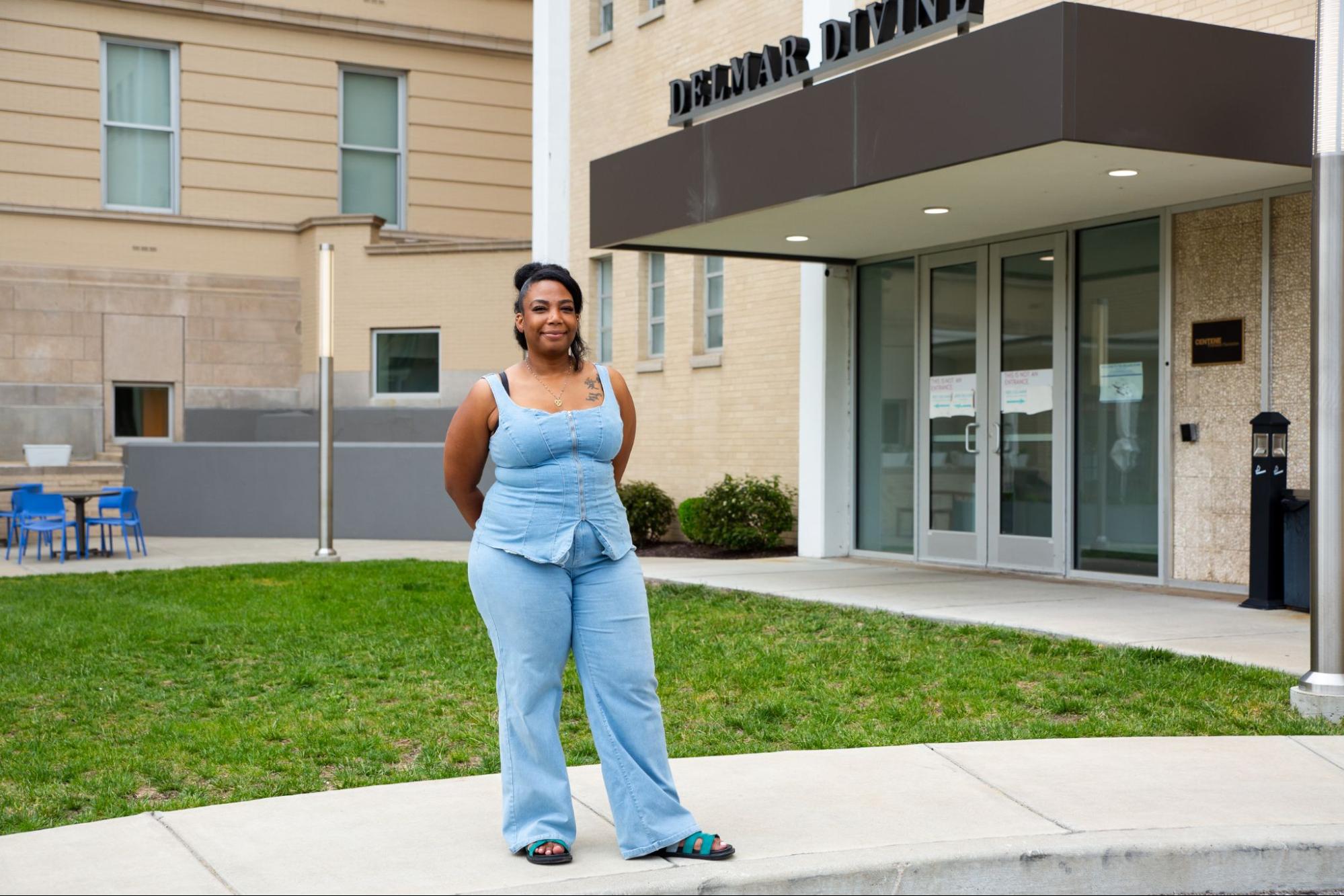
Luckily, we live around the corner from the Delmar Divine, so I was still able to work. Staff and volunteers were responsible for cleaning up our street. The city never came to help with cleaning up. Most of the people who live on my street are elderly, so they needed a lot of help in the aftermath. We made the mistake of going outside immediately after the tornado, which gave my whole household bronchitis. I also developed pneumonia. Apparently, tornadoes kick up a lot of pollen, debris, bacteria, and fungi. Learning this sent me down a rabbit hole to find out that a lot of people who experienced the big Joplin tornado developed ‘tornado lung.’ I was terrified that I was going to develop that, but thankfully, I didn’t.”
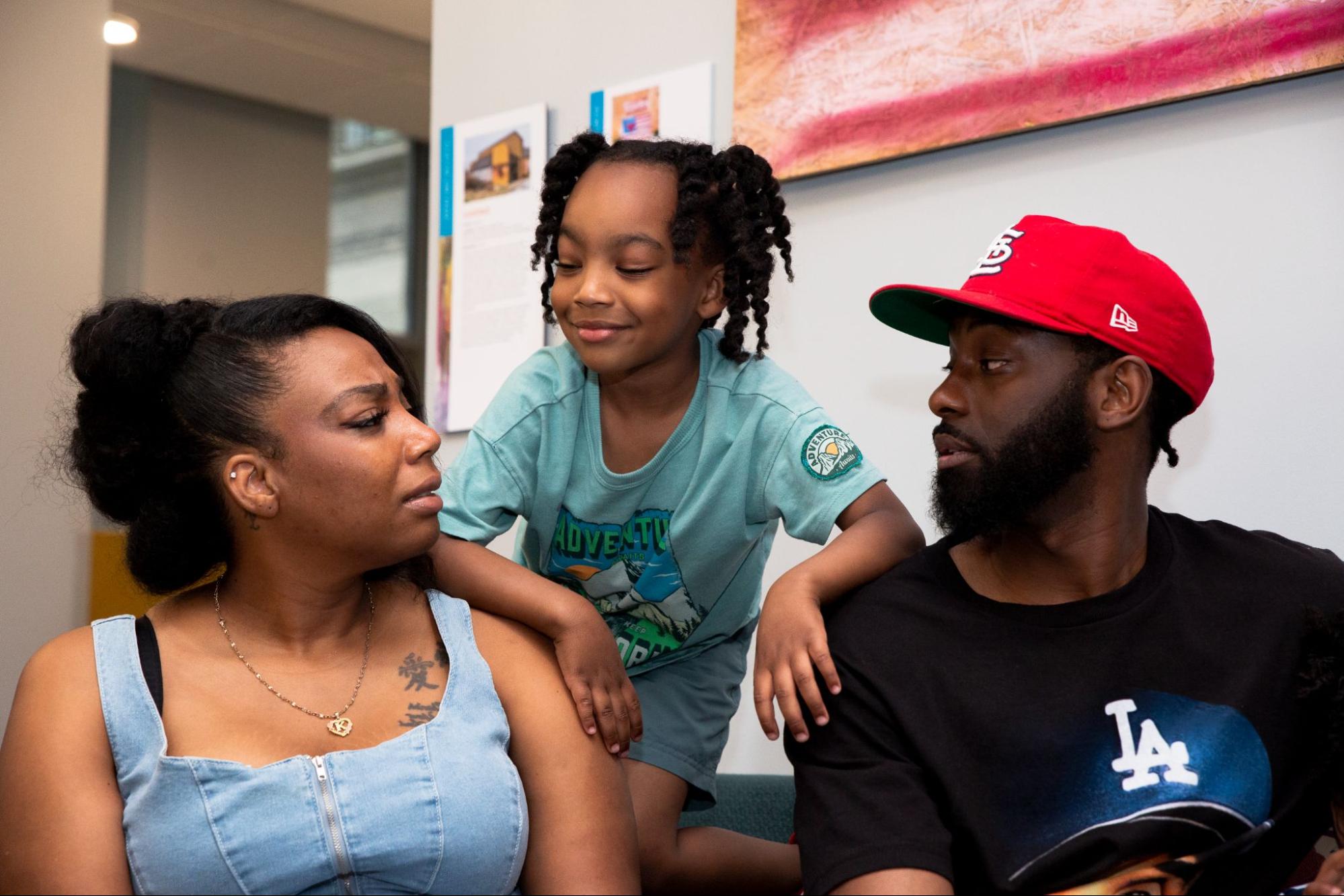
“Our plan was for Kyren to have a big birthday party, but his birthday came a few days after the tornado, so that was obviously cancelled. He was turning two, so he didn’t even know he missed a birthday party. He didn’t care. He was just happy to spend a weekend with my mom.
On the other hand, Nathan Jr. was four and was paying attention to what was happening around him. It may sound insane to some, but he developed PTSD from the tornado. He understood what was happening and saw a lot of the damage. Now, when the wind blows too hard, he’s afraid. A couple of weeks ago, he was at my grandmother’s house when a storm started. We could hear the wind blowing, and he asked, ‘Is your house strong enough? Do we have to go to the basement?’ I remember he asked what the word ‘carnage’ meant. Carnage is a character in Spider-Man. So he would say, ‘Mommy, just look at the carnage,’ when he saw the damage. Even now, when we’re riding in the car, he’ll still ask, ‘Mommy, tell me everything you know about tornadoes.’
We knew that as long as we took a route where he didn’t have to see everything, he would be okay. But that’s difficult because we have to drive down Union to get out of our street, and the Boo Cat Club had a tree fall on their roof. Depending on how much of it he saw determined how upset he was. He just loves nature, and the first thing he noticed after the tornado was that so many trees were gone. As a parent, you try to control everything. There’s nothing I could have done to prevent a tornado or change his experience. This is heartbreaking because he’s a little, funny, happy boy — until the wind starts blowing too hard, and then he falls apart.
Which is why I’m doing the ‘non-Black’ thing and sending my five-year-old to play therapy because he experienced something traumatic. It’s been a year, and the trauma has not passed. It’s still there, just like it was the week after. I’ve tried to talk to him, show him videos, and share the science behind it. We even made a tornado with soda bottles. But he needs the extra support because this is beyond my skill set. My sister died when I was 10, and I wish somebody had put me in therapy. Kids experience trauma, but with less cognitive development, language, and history to apply to a traumatic event. So I will not make the same mistake with my kids. If they need help, they’ll get help.”

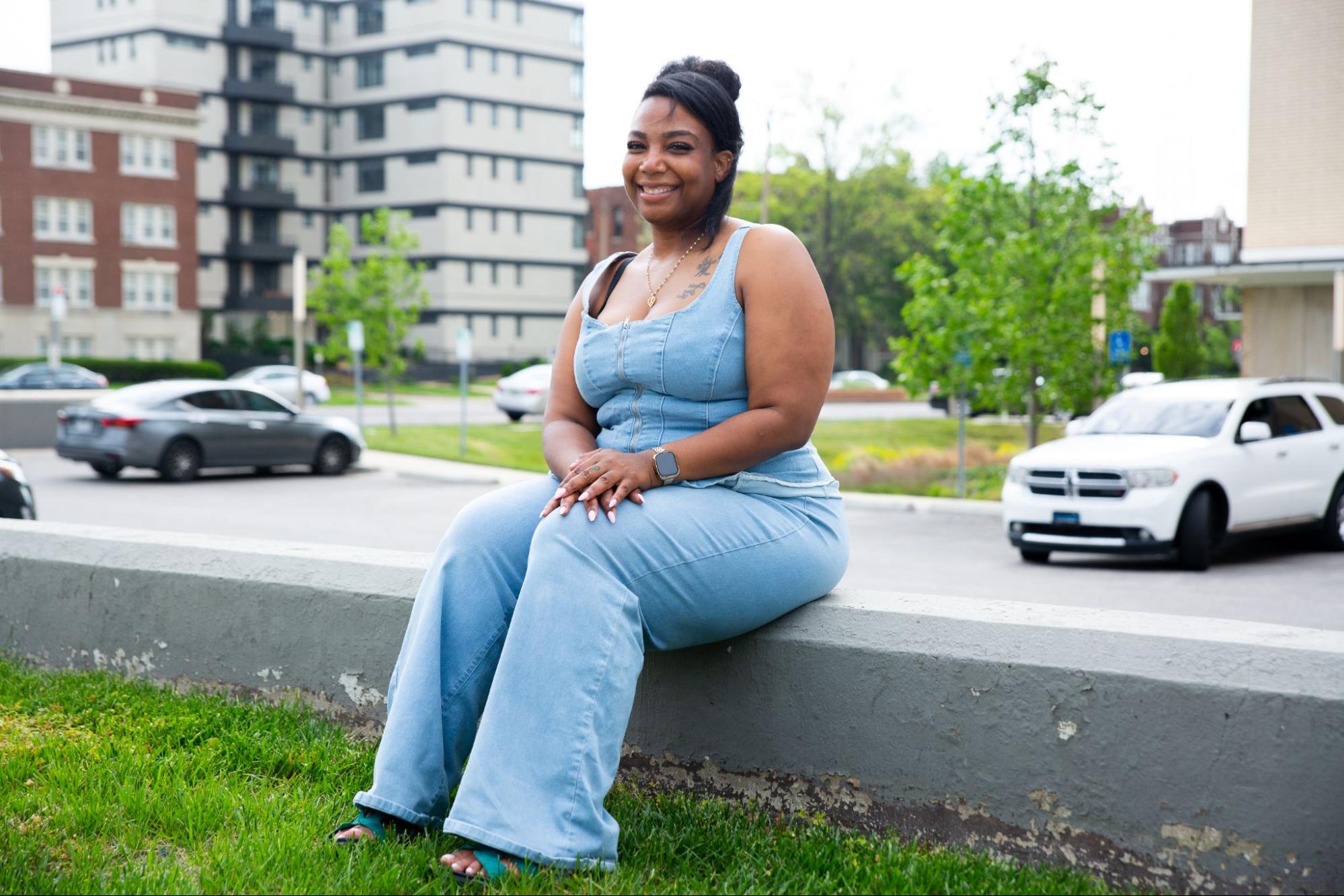
“It’s hard to believe there was a moment when I felt so ashamed that I was in pain for two weeks when I had an ectopic pregnancy rupture. That shame could’ve cost my life. And I thought to myself, ‘How dare I be a public health and maternal health advocate and not take care of myself?’ So I shared about it on Facebook. A day later, a friend called me and said I saved her life because of my vulnerability. She demanded an ultrasound because she thought she was experiencing pain or having a miscarriage. Turns out, she was actually having a pre-ruptured ectopic pregnancy. If I kept to myself, perhaps one of my good friends wouldn’t be here. That’s why I continue to talk about who I am and my experiences with motherhood, careers, and entrepreneurship. If it can help one person, I’m cool.
Transparency brings us out of the shadows of shame. Women have been told that they were designed to be mothers. And that if they couldn’t be one or if their body ‘fails’ motherhood or reproduction, then they’re less of a woman. I’ve never believed that at all. So why was I feeling ashamed for having an ectopic pregnancy? Women are dying because doctors aren’t listening to their pain. So I refuse to allow myself to be ashamed. I make sure to tell my stories. I share my experiences so others can benefit from them. We are all holding stories that need to be told. And from bringing ourselves out of the shadows of shame, we don’t have to experience things in isolation.
A lot of times, we are not actualizing our power because we’re terrified of failure. It's okay to fail. Fail up and fail smart. At some point, something won’t work. Think about a scientist and how many times they have to fail before they get a formula right. So you have to ask, ‘Do I want to be right or do I want to learn? Do I want to grow and push past my self-imposed or societal boundaries?’ Do it scared, and don’t be afraid to start over. I made a hard left in my career path at 30 that got me to where I am today. Also, nobody can ‘empower’ you. Nobody can impart power to you because it’s already in you. You just have to actualize it. Use it for good, use it for evil, but you deserve to use your power to be your full self.”
Kyra Betts, Manager of Policy and Advocacy, Generate Health STL