
The Greatest Investment I’ve Ever Made
April 28, 2026
The Greatest Investment I've Ever Made
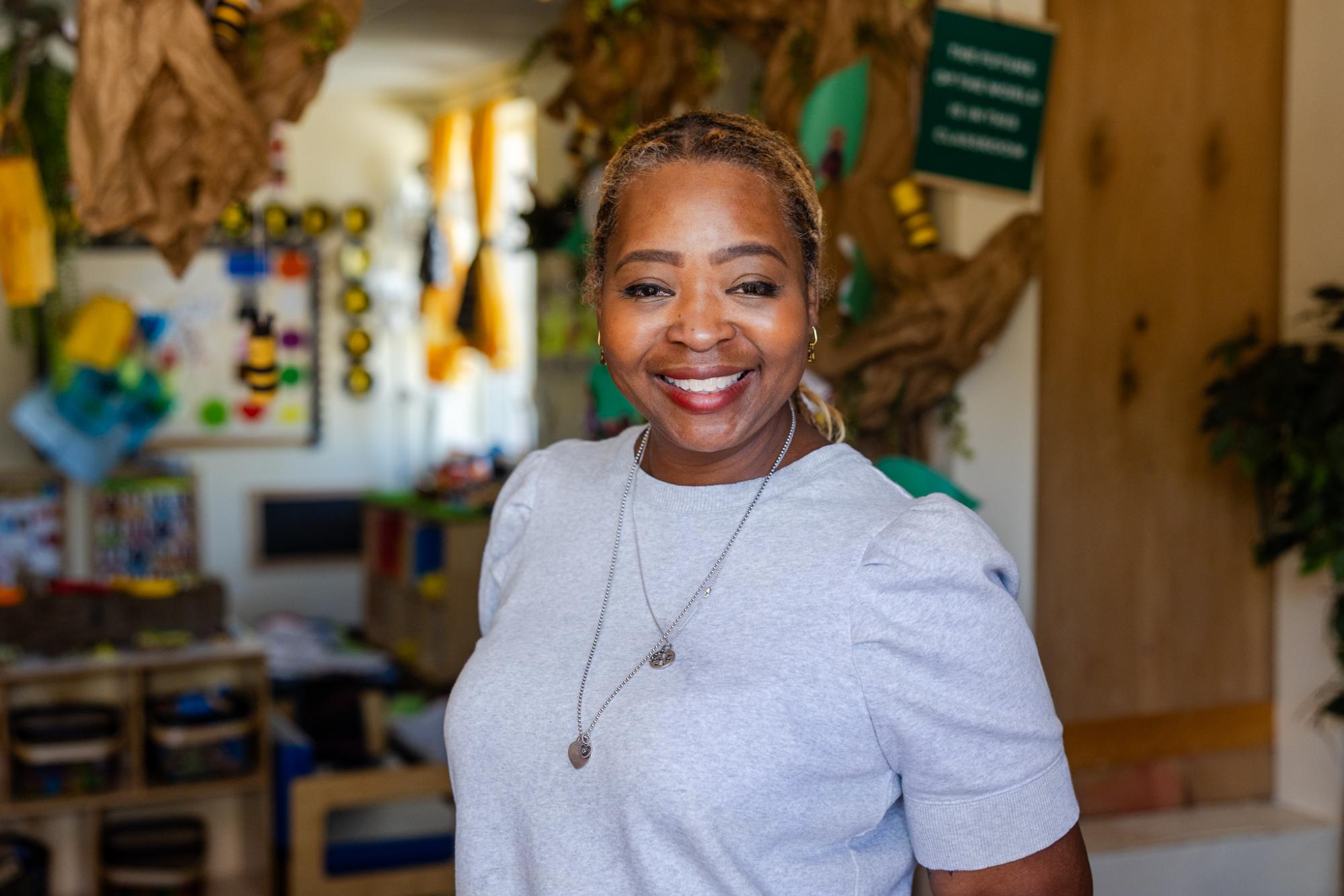
This is a Humans of St. Louis + WEPOWER collab to amplify the stories of educators and families who are part of the childcare community. Childcare providers and workers are on the frontlines no matter what — during COVID, during the tornado, and catastrophe after catastrophe — so parents can go to work, provide for their families, and keep our economy running. We hope you get an opportunity to learn more about what it’s like to be a parent of a child who is five years old or younger, and what it’s like to care for those children at early childhood centers throughout St. Louis.
This story highlights the work of Rochelle Bea from Beginning Futures Learning Center.
Interview by Kiara Fite. Photostory by Kiara Fite and Colleen O’Connell Smith.
"I’ve always considered myself a jack of all trades. Being a program director means you have to be everywhere at once — overseeing operations, solving problems, and making sure everything runs smoothly. On any given day, I might be a cook, a repair person, a grant writer, or even in the classroom as a teacher. It’s funny because I never imagined I’d work with children. My perspective changed after I realized my daughter was experiencing developmental delays at a young age. Her early childhood program didn’t initially recognize the signs, but it turned out she had a disability. I remember older members of our community saying, ‘Don’t let them label that baby.’ I didn’t know if it came from pride, fear, or stigma. But I realized that if my child was going to receive the services she needed, we had to be open to understanding those labels. As a matter of fact, that very label helped explain what was going on in my daughter’s mind. From that moment on, I wanted every parent to have that same clarity and access to support.
At that time, I was working for the state, handling income maintenance programs such as Temporary Assistance for Needy Families (TANF) and Medicaid. Shortly after, I transitioned into Child Abuse and Neglect Services, where I reviewed many requests for proposals. Reading those inspired me to open my own early childhood program and help other families understand their children’s behaviors and developmental needs. Now, for nearly 20 years, I’ve been working in childcare, and I’ve noticed the increase in children who are on the spectrum and seeking specialized services."
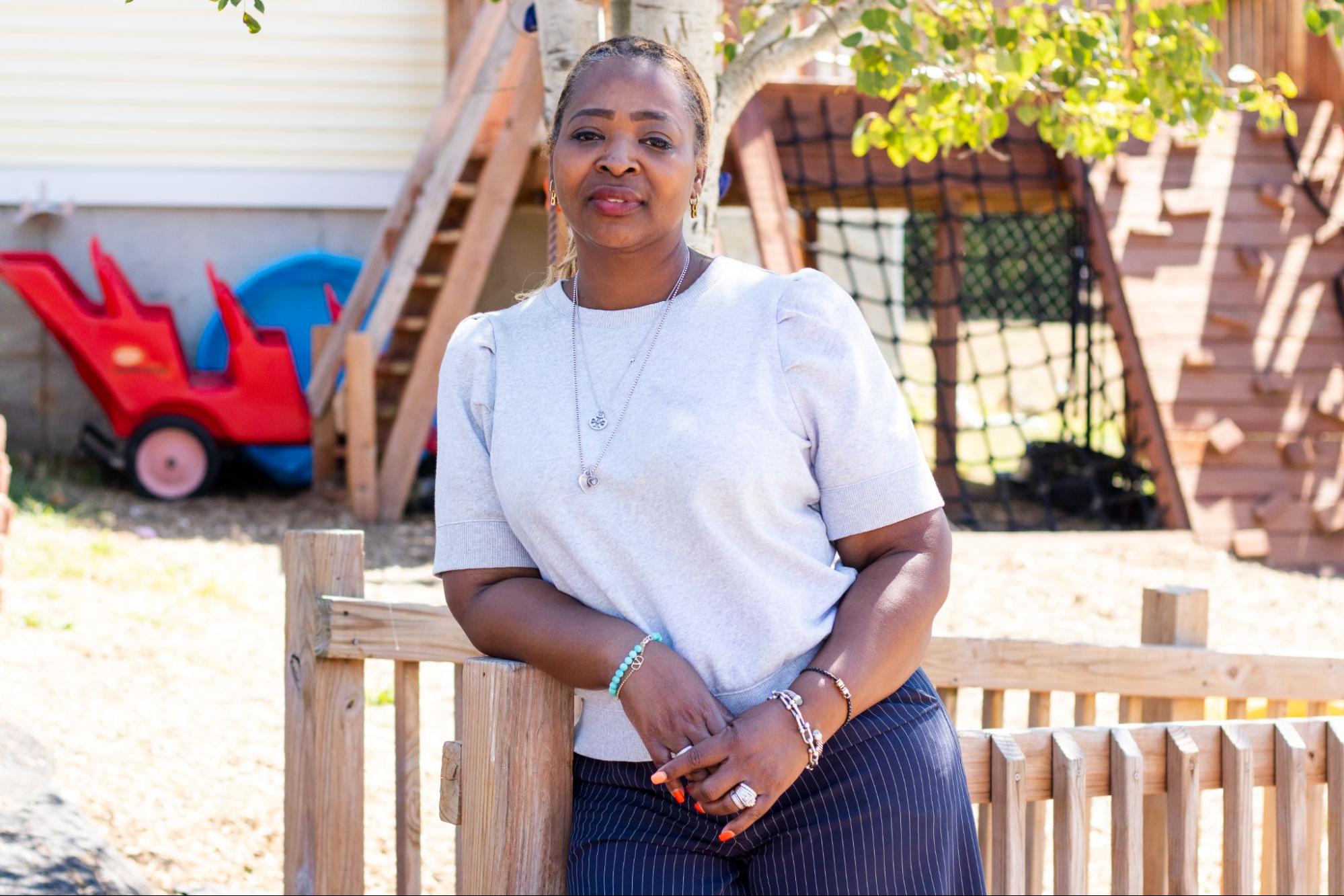
"Growing up, I remember hearing my elders say that Campo-Phenique could cure just about anything. Could home remedies help you feel better? Maybe. But a doctor is trained to support your long-term health and quality of life. Early childhood education works similarly. Parents are naturally nurturing. They can care for and educate their child at home, and many do a wonderful job. But when their child is enrolled in a quality childcare program, the kids learn from their environment, play with other children, practice sharing, and engage in conflict resolution. In a classroom filled with other children and guided by a trained educator, there’s an invaluable exchange of knowledge. Sure, at home, the child may succeed academically and receive the care they need. But if they’ve always had their coat zipped for them, their shoes tied, or been spoon-fed, what happens when they walk into a kindergarten classroom with 20 other children? Early childhood education helps children build independence and life skills so they’re truly prepared when they take that next step into school."
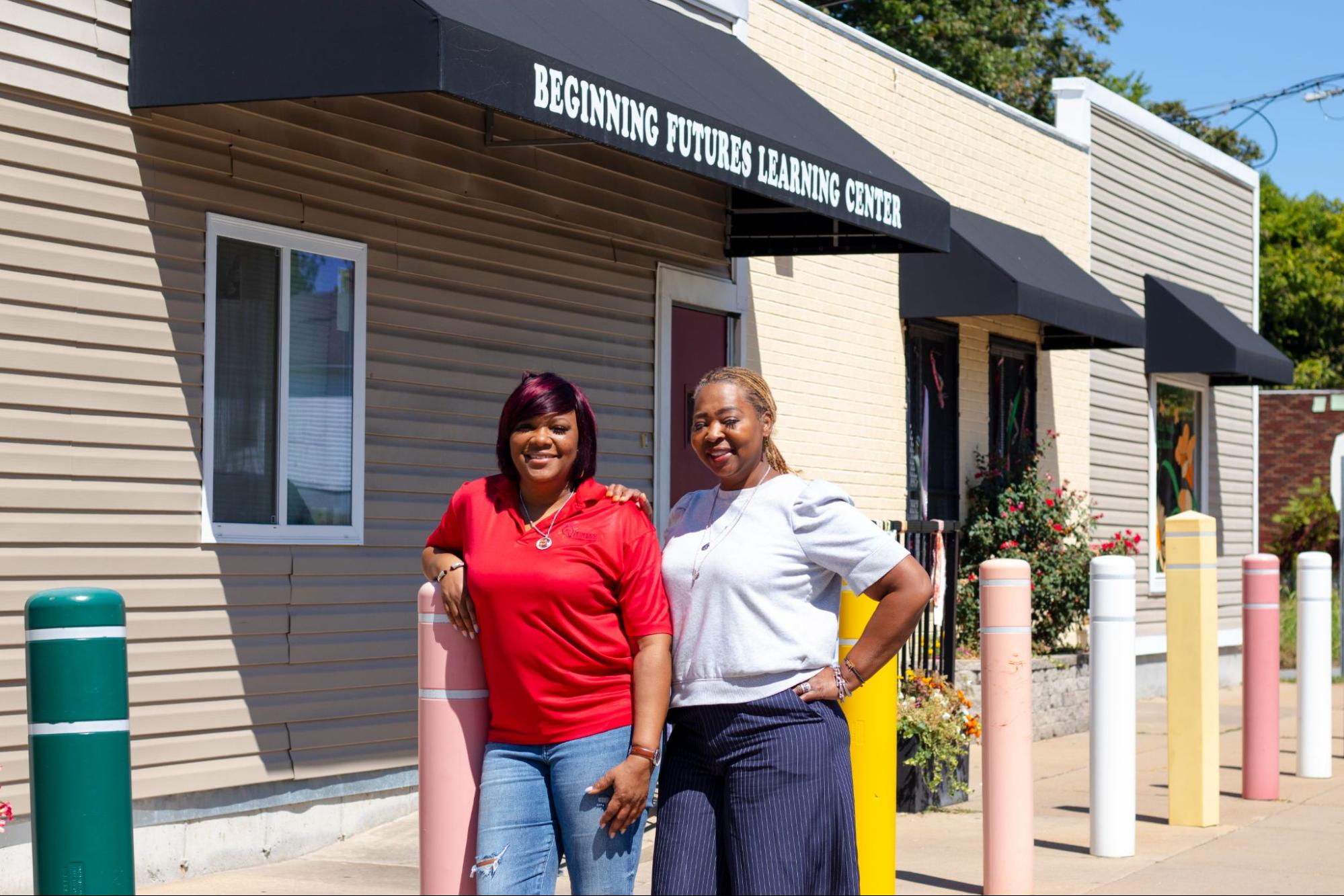
"My sister and I co-own Beginning Futures. It was my idea to open the daycare, and she agreed to come along on the journey. In the first few years of business, we fought quite a bit. We were first-time business owners who didn’t understand how to divide responsibilities, establish rules and structures, and determine who had the final say. As co-owners, we’ve both invested in the business and share the goal of seeing it succeed and grow. However, as the program director, I oversee facility operations, do the reporting, and make the big decisions. My sister is more nurturing than I am, so she works more closely with the teachers.
A major turning point for us came when we received a grant from the Missouri Preschool Project, which helped bring my vision to life. I was assigned a consultant who helped me better understand early childhood education, and she took me on field trips to other school districts that were implementing similar curricula. After seeing a few schools, I knew what I had to do to start our school: get certified teachers. When we first opened the center, neither of us had professional experience in early childhood education. My sister’s background was in mortuary science, and my degree was in psychology. For a few years, we struggled to hire teachers. Eventually, we decided the best solution was to pursue our own teaching degrees. Earning my teaching degree felt natural to me because it was more hands-on. It made me realize I’ve always been a teacher at heart."
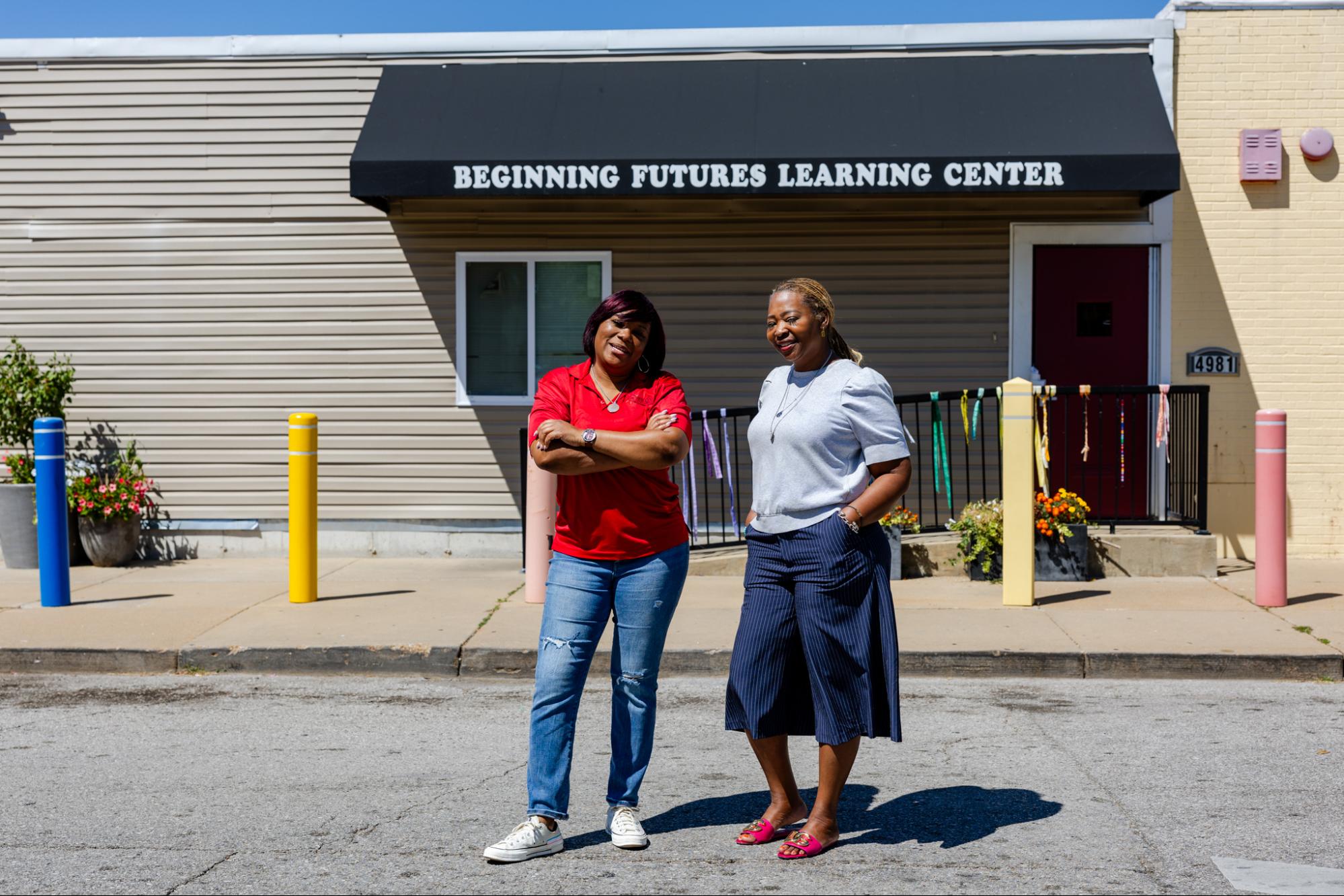
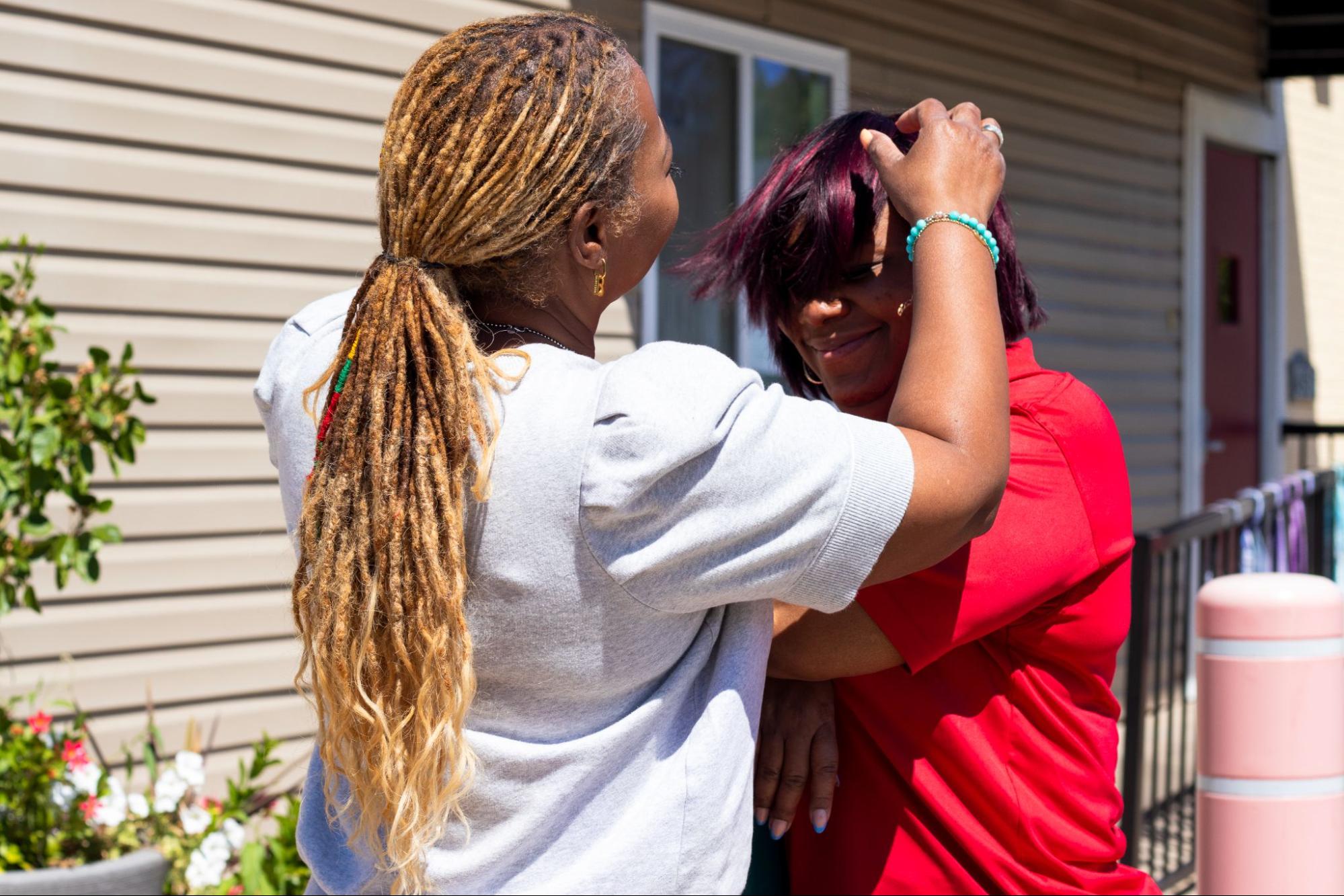
"I don’t remember much about my early childhood experience, but I distinctly remember third grade because my mother made me bring my sister to school. Mom needed a babysitter, and I needed something to share for Show and Tell. As the eldest, I didn’t have to take care of my sister much, but I definitely bossed her around. Working with me here, I’m still her boss."
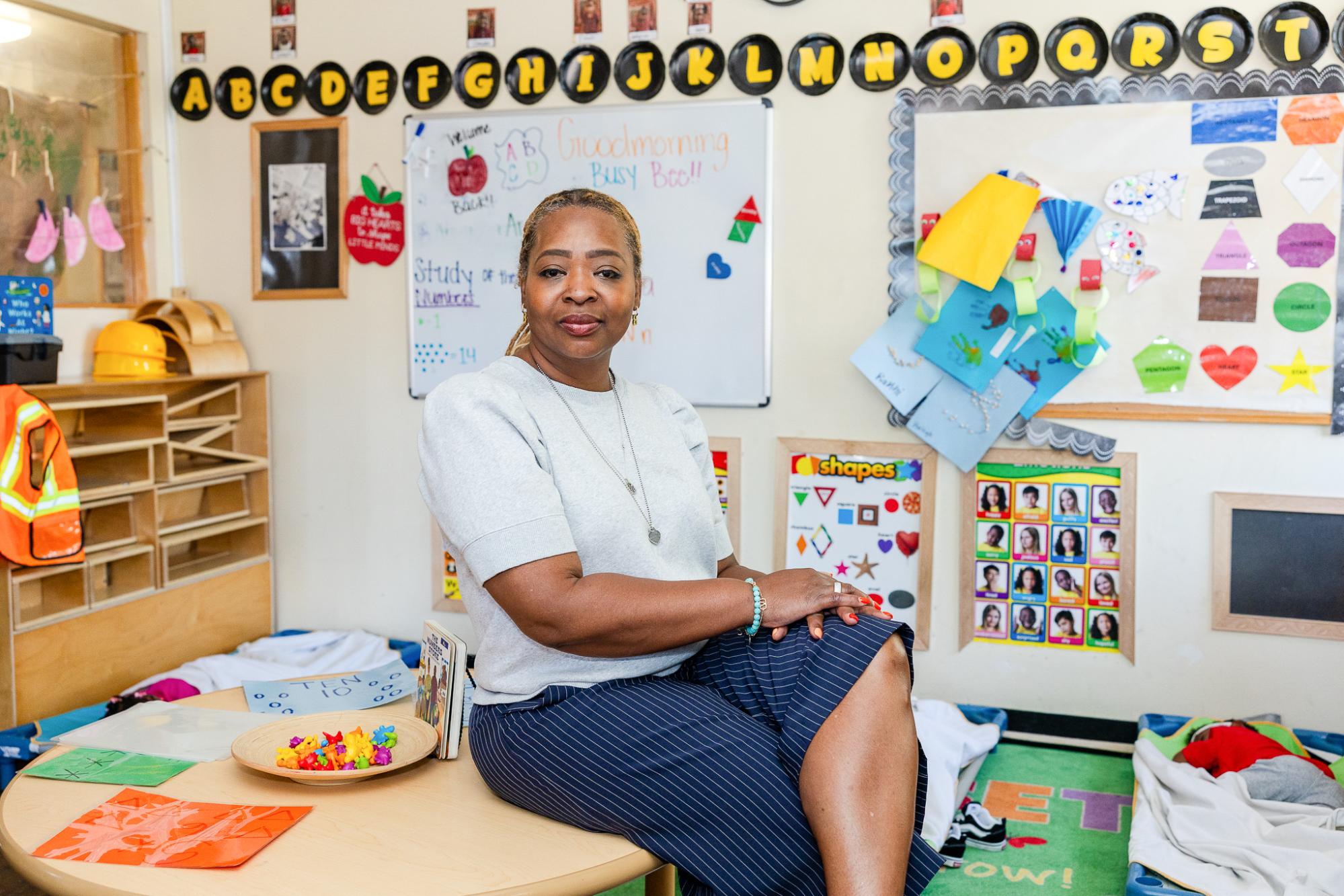
"We run an income-based Head Start and charter school collaborative program to help prepare children for kindergarten. All our students attend at no cost during the core curriculum hours from 9 a.m. to 3 p.m. Some families pay for before- and after-care, but everyone has access to free education. Only a small number of students are enrolled from the neighborhood because a good chunk of the area has been condemned. Usually, when people hear we’re in Walnut Park, they immediately assume the worst and stay away. However, many families who can’t afford tuition have been referred here because we can offer high-quality education at no cost. That’s why we have families coming from all over the region, the furthest from Kirkwood.
I remember when we were first starting, and the Missouri Department of Elementary and Secondary Education said, ‘You’re not getting a Taj Mahal, but this grant is going to help you run a quality program.’ And despite other issues going on around the community — drugs, mental health, homelessness, whatever — providing quality childcare is an important starting point. The fact that our funding agencies hold us accountable helps us be better for the children and families we serve."
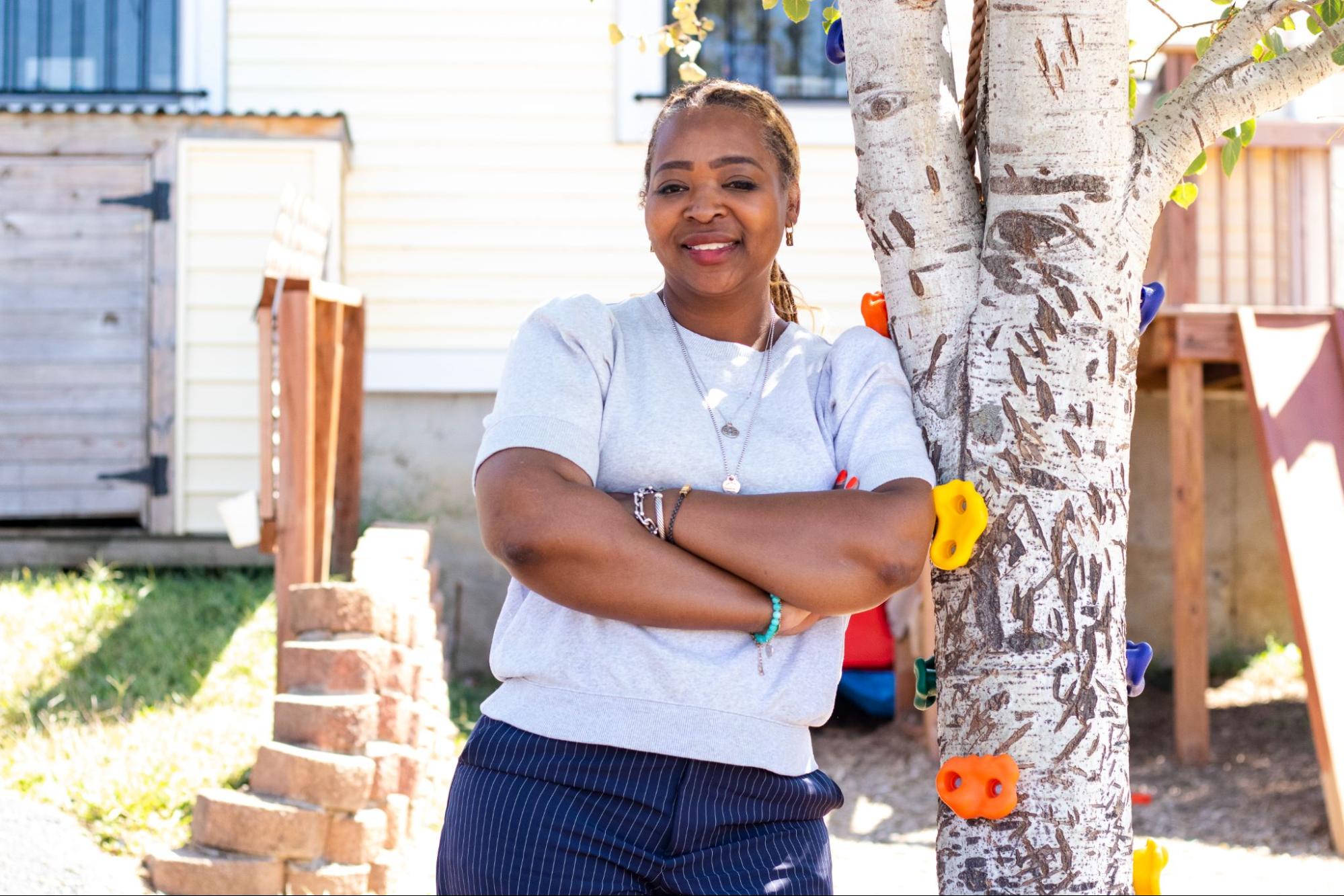
"This learning center was a part of the ‘Dollar House’ pilot program. I was told I could rent it for $1 per square foot. At first, I was excited, but then I asked for the square footage. When I learned that it was 2,761 square feet, I realized that it would still be a significant cost for us. I went through an emotional rollercoaster. After some negotiation, they settled on $100 a month, and we paid that same amount for 16 years. Having a reasonable rent allowed us to invest a few thousand dollars back into the building and offer 401(k) plans, PTO, sick leave, medical insurance, and livable wages for our staff. Looking back, securing this space was the greatest investment I’ve ever made."
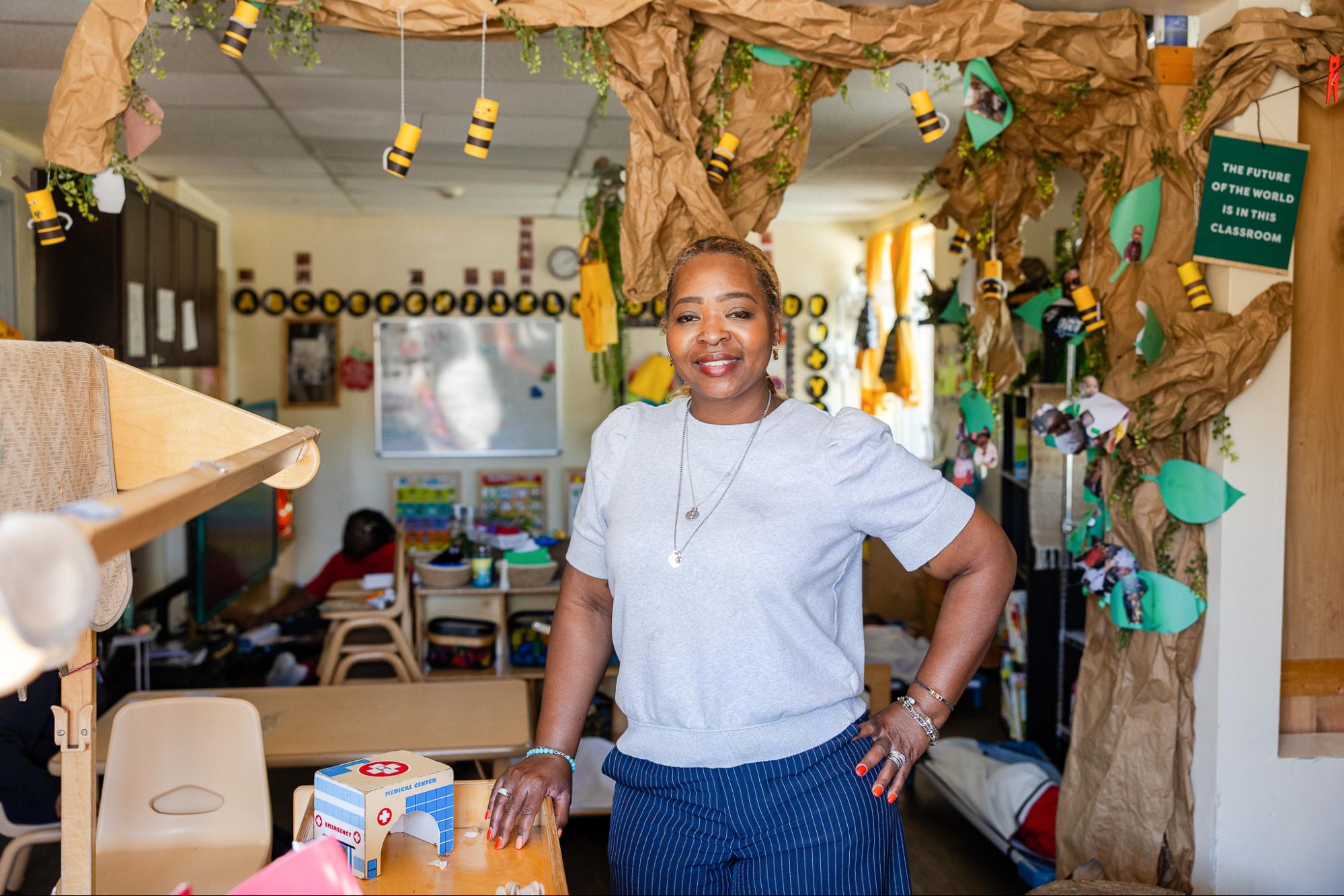
"One of the realities of working in early childhood education is that your team could be made up of people with a variety of professional backgrounds. The job is seen as entry-level, so we tend to attract whoever needs work. We’ve had applicants come to us from Family Dollar, Schnucks, Target, and public transit. I get it — people need to pay their bills. But sometimes, they end up falling in love with this role because they get to be a safe place for children who may not have previously gotten the quality care they deserve. The truth is, our employees really have to love being here because they could make a higher salary elsewhere. A starting wage in childcare could be between $12 to $15 an hour. Even when we pay someone $20 to $21, they may still be living close to poverty depending on the size of their household. We do offer medical benefits, but only 10% of the team takes advantage of them because so many other staff members need the full check. It’s a challenging reality in this field. But the people who stay do so because they care deeply about the children and families we serve."
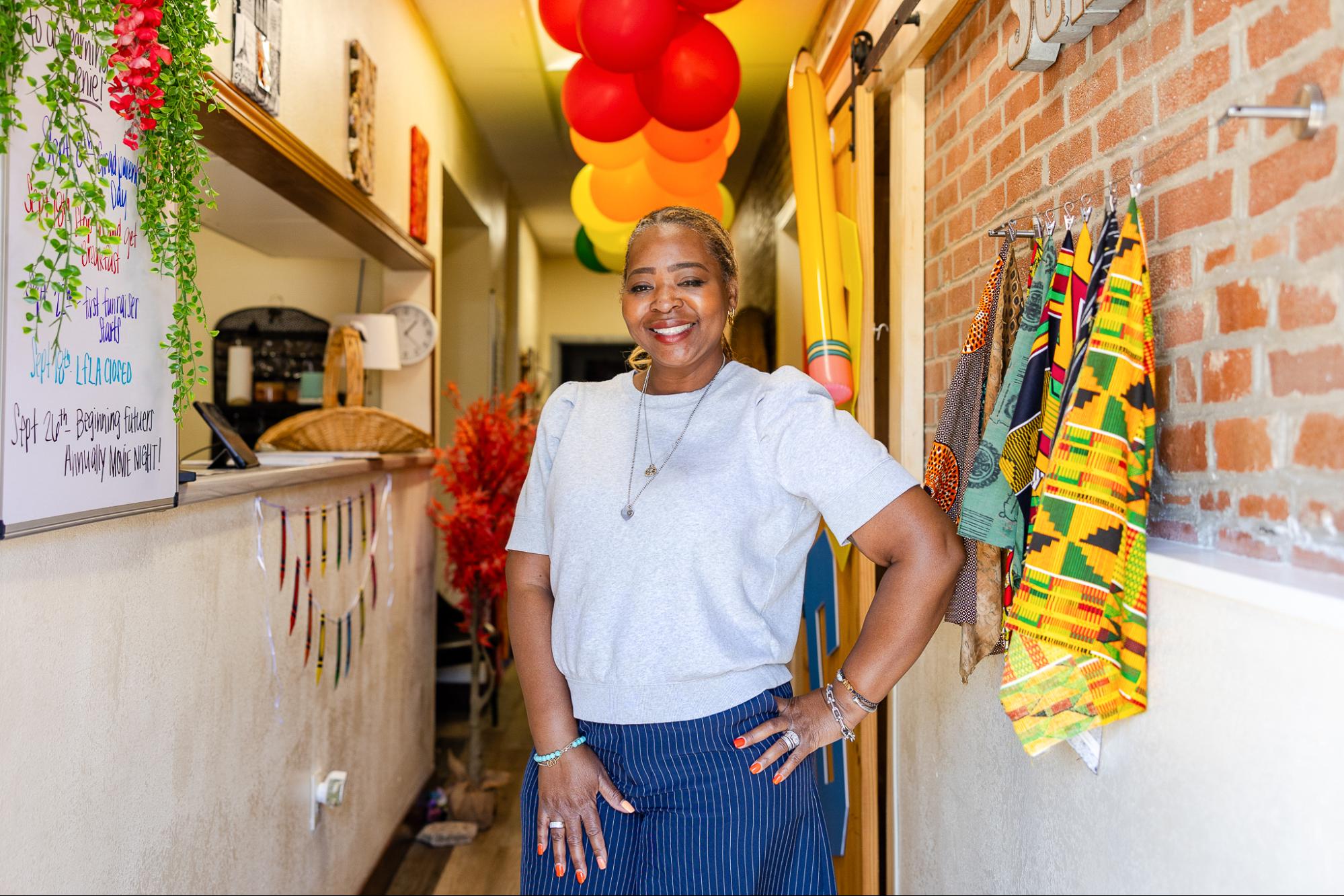
"I truly have a team of rock stars. Some people are ‘baby whisperers’ who thrive working with newborns. Others are energized by working with preschoolers. We try to place teachers in their happy space so they can do their best work. Over the years, we’ve been fortunate to have strong staff retention. Only a few employees have left. The pandemic was one of the first times we had a transition in staff. Teachers who had been here for over eight years left because other companies were offering higher wages. Interestingly, some employees who left our center returned because they weren’t receiving the same support. There’s something about this support system, this building, and this community that encourages people to stay, and even come back.
There are some perks to working here, too. Our team can expect to eat a nutritious meal every day. Some people at other jobs have to buy their lunch. Imagine how much money our educators save? They get evenings and weekends off, a brain break during the children’s nap time, and some flexibility in their schedules. We’ve worked around people’s medical schedules, allowed their older children to spend time here to stay safe and productive, provided before- and after-care for their kids, and even allowed staff to quickly run home to do laundry or start dinner. We try to understand our team and help them where we can. At the end of the day, I just want to see my teachers shine."
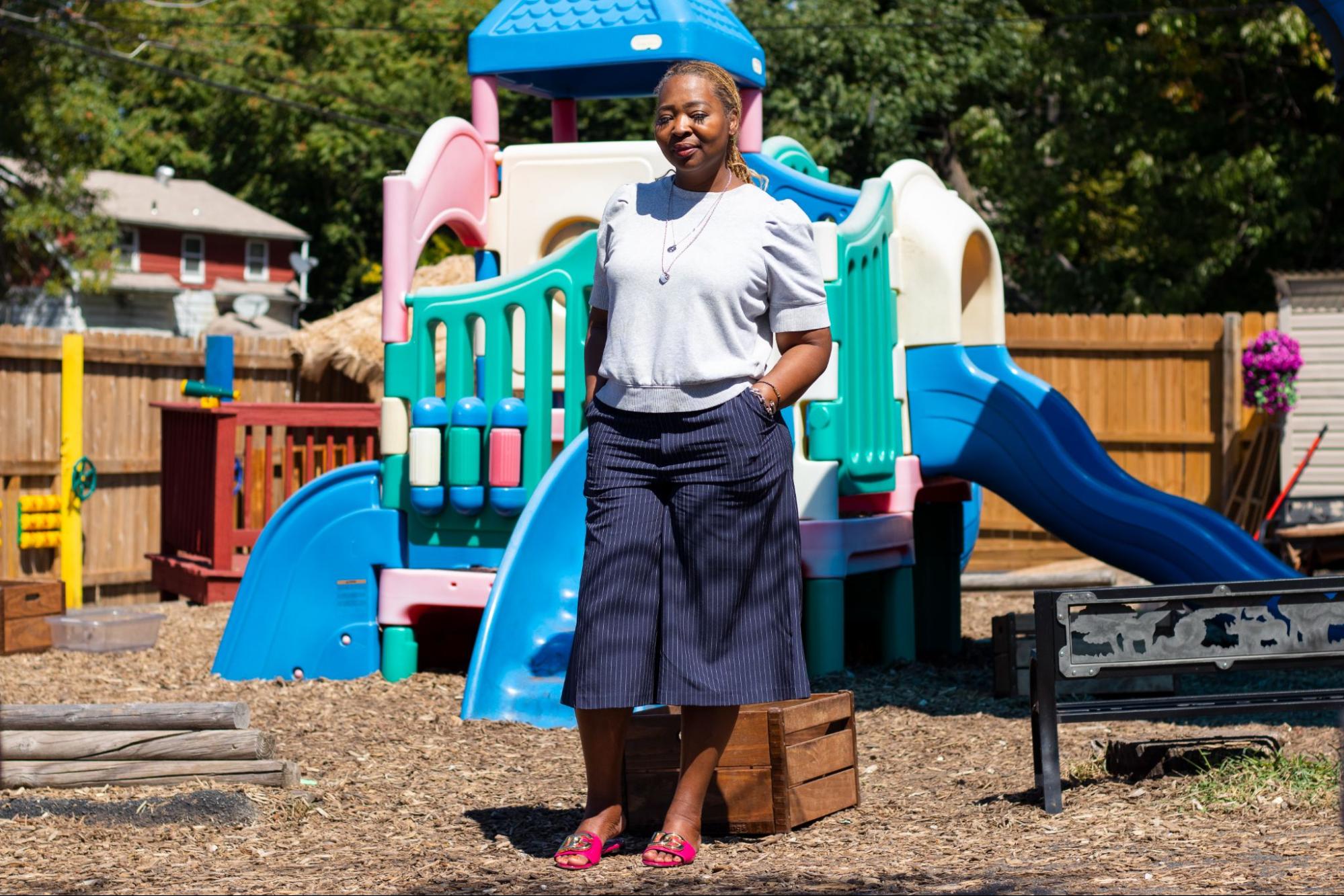
"I was so grateful the pandemic wasn’t financially hard for our early childhood center. Head Start continued to pay us throughout, in addition to our grant funding. Not every early childhood center was able to access those resources, either because they were unaware of them or didn’t meet the criteria. You don’t have to get ready if you stay ready, and we were ready. So this additional funding put us in a financial surplus, which not only helped us survive but also allowed us to use the money, along with a portion of our operating dollars, to help five other early childhood centers make ends meet. Thanks to our work with STAR Coaching, we were able to identify and help them. On top of that, our team distributed PPE, phonebanked, and worked on Prop R to get funding to support mental health in early childhood programs.
As an Early Childhood Education Fellow with WEPOWER, I helped with the door-knocking to get Prop R on the ballot. After the votes approved it, Beginning Futures then applied for the funding. For three years, the program provided $150,000 annually, but through additional subsidies and grants, including the Gateway Alliance Grant, we were able to invest nearly $300,000 into the program. That allowed us to hire a mental health specialist and conduct pre- and post-assessments for kindergarten readiness. We were able to offer mental health services and initiate peer-to-peer coaching between us and 12 other early childhood facilities. And if a partner program didn’t have the same resources, we shared ours with them.
Because some programs needed more, we invested in helping them build their learning environments, too. So we acted as weekend warriors by coming into their centers to help. Their educators learned to talk to children in a nurturing tone, identify what a colorful plate looks like at mealtime, and craft lesson plans and comprehensive curricula. Over time, that support paid off. Five or six of those centers eventually earned accreditation. It didn’t make sense for me to continue building our program if that meant other centers didn’t get what they needed. Ultimately, it felt great to be able to help our community during that time of need."

"COVID really impacted the children who had to stay at home. Usually, they’d be able to go outside and interact with the world around them. But during that time, those experiences were limited or completely removed. As a result, many children experienced developmental delays because they were spending most of their time at home with parents who were also trying to work remotely. Even though parents and children were physically together, the children weren’t always able to receive the same level of engagement or social interaction they would have had in a classroom or group setting. Young children learn so much through interaction with other children by sharing, communicating, and simply playing together. Without those daily opportunities to socialize and explore, many missed important developmental moments."
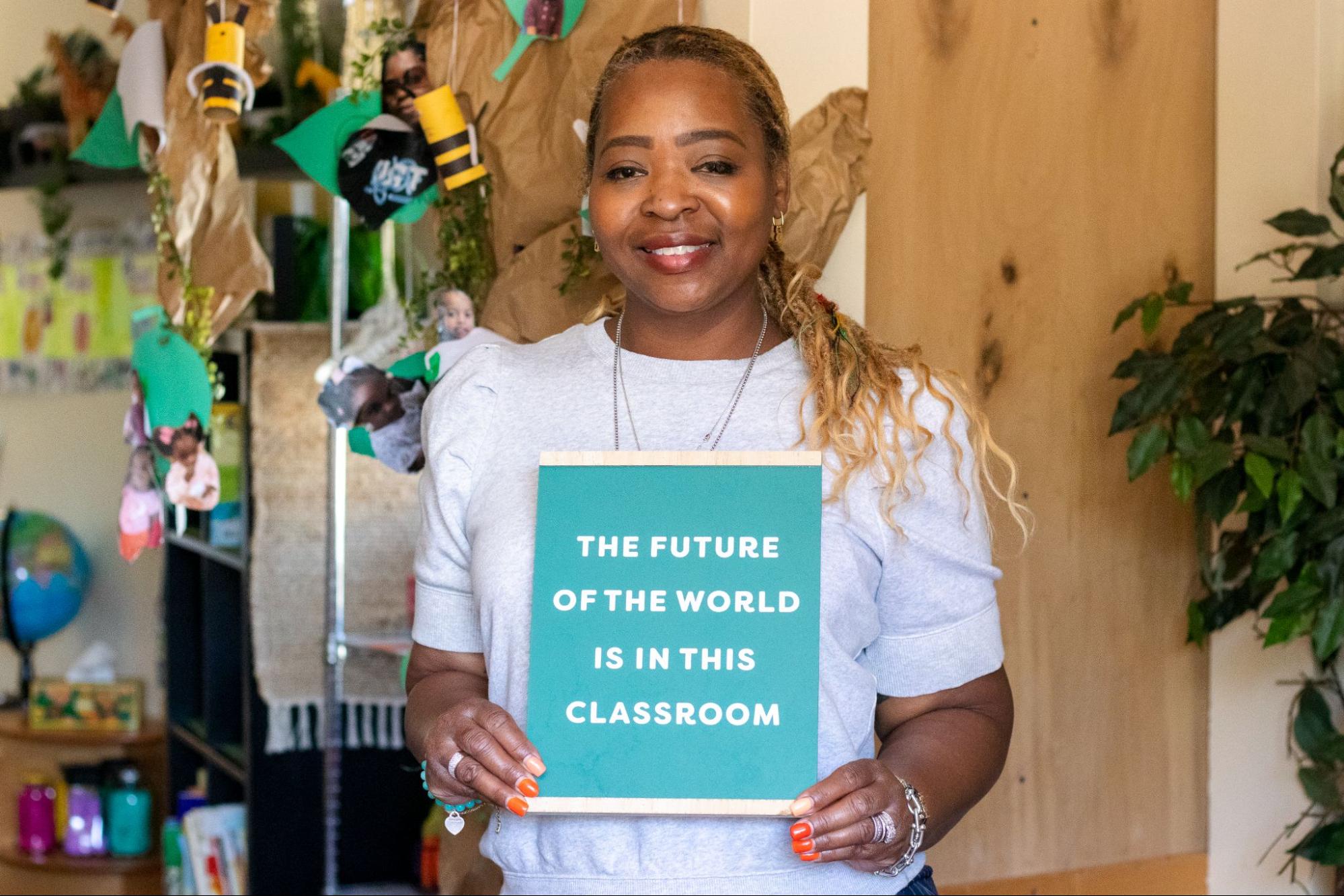
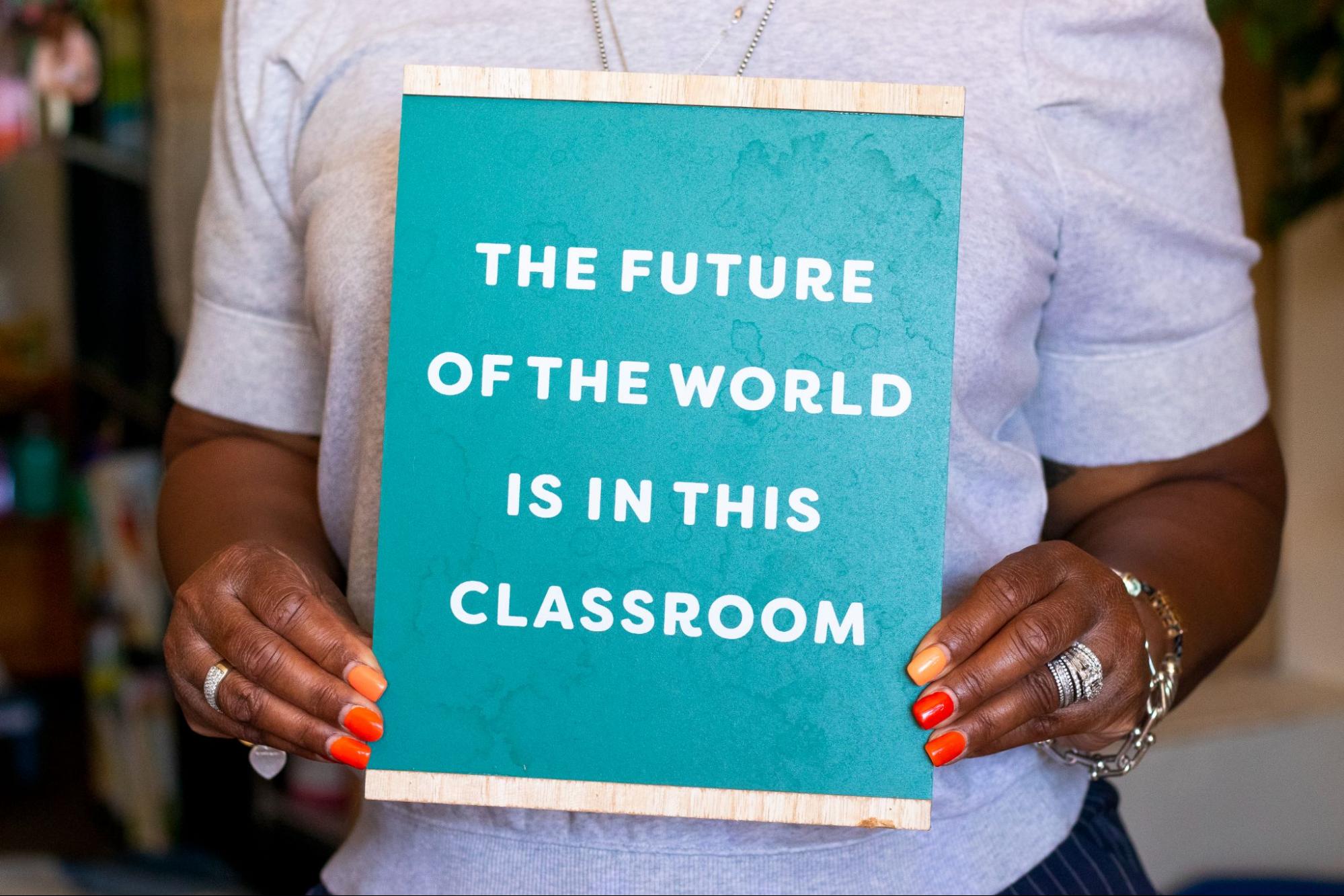
"If kindergarten is the start of one’s educational career, then early childhood education is just as important because it prepares children to be ready for kindergarten. In the classrooms for infants, children are prepared to crawl, sit up, walk, and make babbling sounds. This sets them up for the classrooms for one-year-olds, where they form words, share with their friends, eat table food, and explore sensory textures. In the two-year-old classroom, they talk all the time. When one child cries, another will say, ‘It’s okay, your mommy will be back.’ If a child is prepared for kindergarten, then their teacher can prepare them for the first grade. And eventually, they’ll be prepared for second and third grade when they start taking tests.
When I ask educators, ‘What would help you as a kindergarten teacher?’ they always say, ‘If I have a socially and emotionally balanced student, I can educate them.’ If a child’s first schooling experience is kindergarten, an unfamiliar routine could be overwhelming for them. There’s so much that goes into early childhood education. It’s not just always about the ABCs and 123s. It’s kind of like a job. When I first graduated from college, I’d apply for jobs, but I was told I didn’t have enough experience. So why does an adult need experience to take on a job, but a child doesn’t need experience before being placed in a kindergarten classroom? Without exposure to preschool, they may not know what’s going on or even be able to express that they don’t know. It doesn’t matter the setting. It could be a childcare center, a home center, or children could be raised around their cousins. It’s important for young children to be in environments where they learn from one another."
Rochelle Bea, Program Director, Beginning Futures Learning Center